Close Menu
Crypto Valley Journal
    Facebook X (Twitter) Instagram
    Crypto Valley Journal
    • Hot Topics
      • News
      • Minds
    • Focus
      • Background
      • Blockchain
      • Legal & Compliance
      • Non-Fungible Token (NFTs)
    • Investing
      • Markets
      • Financial Products
      • Decentralized Finance (DeFi)
      • Exchange overview
    • Education
      • Basics
      • Glossary
      • Politicians on crypto
    • Statistics
      • Bitcoin-ETF-Flows
      • Ethereum-ETF-Flows
      • Crypto market data
      • On-chain data
    • Academy
      • Overview
      • Part 1: Blockchain
      • Part 2: Money
      • Part 3: Bitcoin
      • Part 4: Cryptocurrencies
      • Part 5: Decentralized Finance
      • Part 6: Investing
    • English
      • Deutsch
    Crypto Valley Journal
    You are at:Home » Glossary » Market cap
    Market Cap

    Market cap

    By Luc Python on 23. July 2025 Glossary

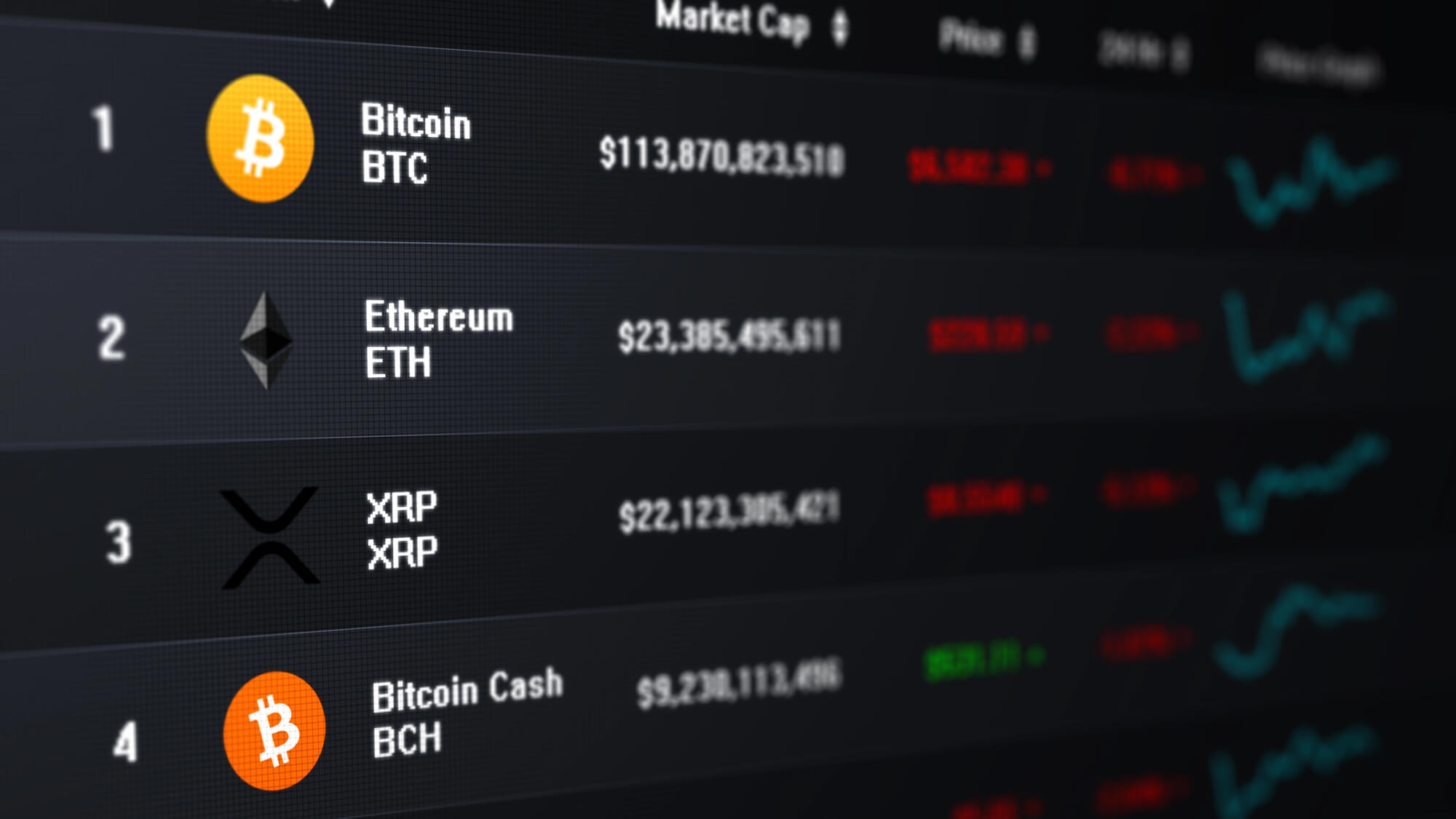
    Market capitalization (market cap) is a key metric that measures the total value of an asset, such as a cryptocurrency, by multiplying its current price by the circulating supply of its tokens or shares.

    Market cap provides insight into the size, stability, and overall market value of a project. A high Market cap typically indicates an established project with lower volatility, while projects with smaller Market caps are considered riskier but may have higher growth potential.

    How Market cap is calculated and used:

    The formula for Market cap is simple: Market cap = Current price × circulating supply. For example, if a cryptocurrency is priced at $100 and has 10 million tokens in circulation, the Market cap would be $1 billion. Market cap helps classify assets into different categories:

    • Large-cap: Generally over $10 billion, indicating stability and lower risk.
    • Mid-cap: Between $1 billion and $10 billion, representing growth potential with moderate risk.
    • Small-cap: Below $1 billion, indicating high volatility but potentially high returns.
      Investors often use Market cap to compare the size and potential of different cryptocurrencies, as it offers a clearer perspective than just the price per token.

    Why market cap matters:

    Many investors mistakenly believe that a low-priced token has more potential for growth, overlooking the importance of Market cap. A token with a high circulating supply and low price can still have a massive Market cap, making further price increases difficult. Conversely, a cryptocurrency with a smaller supply and moderate price may have a lower Market Cap, offering more room for growth. Understanding Market cap helps investors assess risk, evaluate the potential for returns, and avoid common misconceptions like unit bias.


    Basics
    24. September 2026

    Unit bias in crypto: Why cheap coins mislead investors

    Unit bias leads crypto investors to favor low-priced coins. Why unit price is misleading and why market capitalization matters.

    The Chainalysis Crypto Crime Report puts illicit activity below 1% of on-chain volume, countering the myth of Bitcoin as a criminal currency. Basics
    23. September 2026

    Myth: Bitcoin and cryptocurrencies mainly serve criminal activity

    The Chainalysis Crypto Crime Report puts illicit activity below 1% of on-chain volume, countering the myth of Bitcoin as a criminal currency.

    Zcash hides transaction data with zk-SNARK proofs and now sits between a US spot ETF listing and the EU privacy coin ban of 2027.
    22. September 2026

    What is the privacy coin Zcash (ZEC)?

    The Trezor data breach at fulfillment provider ShipMonk exposed names, addresses and phone numbers of 13,689 customers.
    21. September 2026

    Hardware wallet comparison 2026: Ledger vs. Trezor – new models, new risks

    The Ethereum Foundation's Protocol Cluster rated 62 EIPs and set December 2029 as the target for a quantum-safe Ethereum base layer.
    8. September 2026

    Ethereum targets a quantum-safe blockchain by 2029

    Bitcoin near USD 78,000 and stablecoin supply above USD 300 billion shape the crypto market outlook heading into Q4 2026.
    2. September 2026

    The signals to watch: a crypto market outlook for Q4 2026

    Liquidity depth, custody controls, latency, capital efficiency and dedicated support decide which venues institutional traders actually approve.
    28. August 2026

    5 infrastructure requirements institutional traders demand from crypto venues

    Cardano's DReps are 24 percentage points short before the deadline, while Solana's quorum rule contradicts its own governance framework.
    27. August 2026

    Cardano and Solana: The weaknesses of on-chain governance

    Popular Posts
    About Crypto Valley Journal
    About Crypto Valley Journal

    On the pulse of the movement

    • Academy
    • Contact
    • Advertising
    • About us
    • Partner
    • Imprint
    • Privacy
    • Disclaimer
    Search

    Type above and press Enter to search. Press Esc to cancel.