
A summarizing review of what has been happening at the crypto markets of the past week. A look at trending sectors, liquidity, volatility, spreads and more. The weekly report in cooperation with market data provider Kaiko.
The DeFi sector continues to reel from the Curve exploit although more than 70% of funds have now been returned. In non-exploit news, Coinbase exceeded analyst revenue expectations, a wave of companies filed for ether ETFs, and Tether is now one of the largest BTC holders. This week, we explore:
- A mysterious USDT imbalance in DeFi liquidity pools
- Huobi's trade volume amid rumours of executive arrests
- A surge in memecoin activity
Why is there a Tether imbalance on Curve?
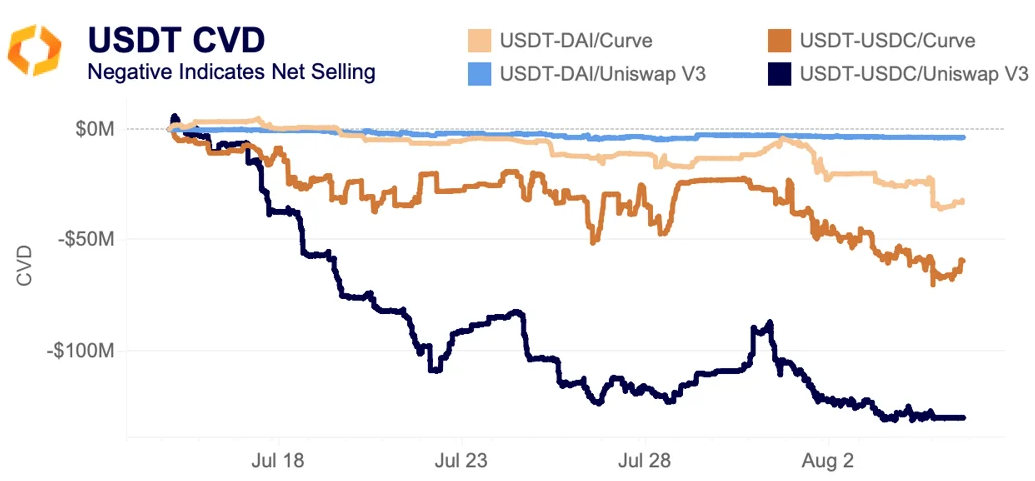
Curve's 3pool and Uniswap V3’s main USDT-USDC pool both became imbalanced heading into the weekend as USDT selling escalated. However, this trend actually started in mid-July, with $100mn net selling on Uniswap from July 15 to July 22. While the net selling eased in the last few weeks of July, it picked up again on July 31, the day after the Curve exploit (these two events seem to be unrelated).
Uniswap experienced net selling of about $40mn and Curve $35mn. As of this writing the Curve pool is heavily imbalanced, holding 60% USDT. On centralized exchanges, USDT also dipped slightly below its dollar peg over the past few days.
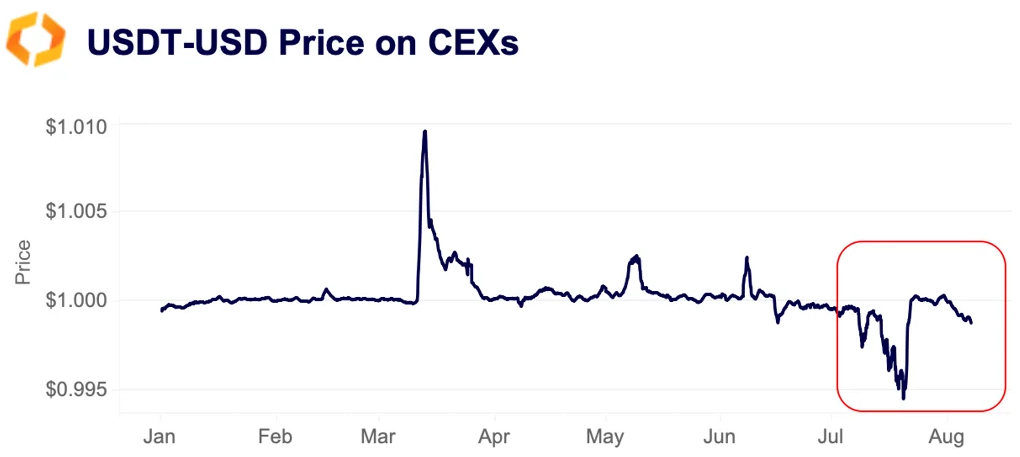
It is unclear why traders are swapping out of USDT as there has been no clear bearish catalyst. In fact, Tether just reported massive Q2 revenues. Tether's CTO suggested that the selling could be foul play and closely timed with Binance's listing of the new stablecoin FDUSD on July 26th, issued by Hong Kong-based First Digital. However, there is no evidence that these two events are linked.
FDUSD trade volumes have struggled to take off after its listing on Binance, even after several zero-fee trading pairs were added. Daily volumes spiked to over $200 million before dropping to around $30mn.
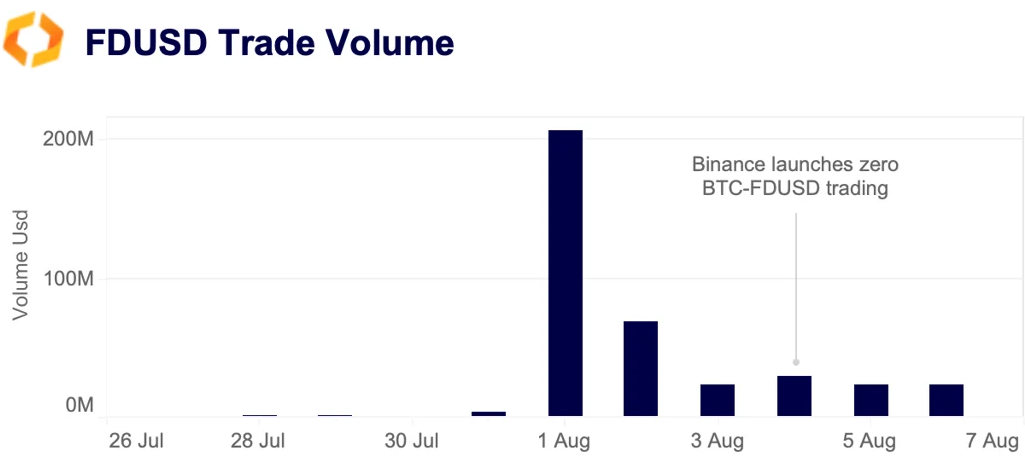
The lackluster market response to the zero-fee FDUSD pairs is surprising given that these types of promotions typically have a strong impact on overall trading activity. For example, TUSD volume skyrocketed after Binance promoted the stablecoin's zero-fee pairs. This suggests that traders are unaware of or reluctant to engage with FDUSD.
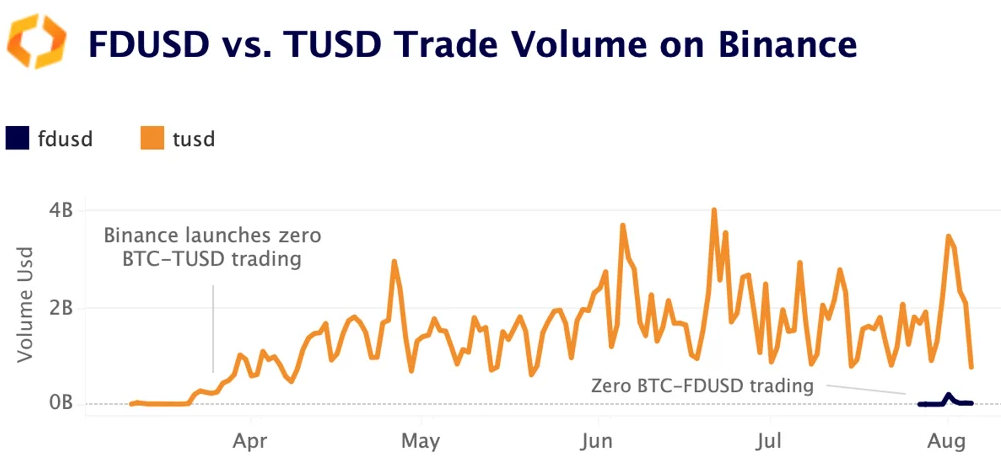
FDUSD conspiracy or not, it is clear that the stablecoin wars are back on track. Despite Tether's less-than-perfect track record on transparency, traders have historically turned a blind eye, which means the heavy selling is indeed mysterious.
Huobi's market share soared
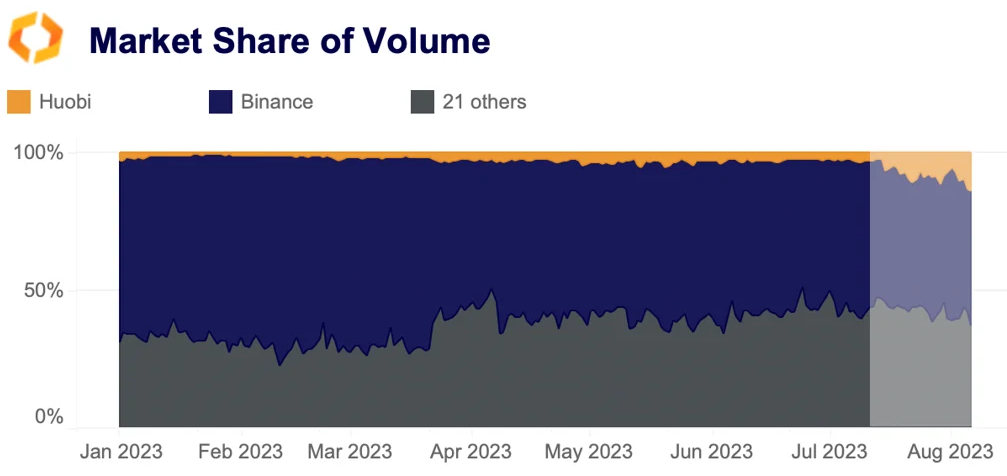
Over the weekend, financial media in Hong Kong reported that several Huobi executives had been detained. There has since been a sharp increase in exchange outflows. The news comes at an interesting time for Huobi: starting in July, Huobi's trade volume started experiencing a somewhat miraculous turnaround, helping the exchange's market share climb from just 3% to as high as 11% relative to the most liquid exchanges. No one crypto asset contributed to these gains, with volume distributed evenly across all altcoin markets.
This trend is notable because very few other crypto exchanges have experienced a similar increase in trade volumes. We are in the middle of a summer doldrums, with low volatility and trading activity. The exchange has publicly denied the reports calling it "FUD", but it is unclear how this will impact market share in the short term.
Curve liquidity continues to slide following exploit
The impact of the Curve exploit is ongoing, with liquidity also dropping for pools that were unaffected, part of a longer-term downtrend since the FTX collapse. For example, Curve's stETH-ETH pool has seen about 70k total ETH and stETH removed since the exploit.
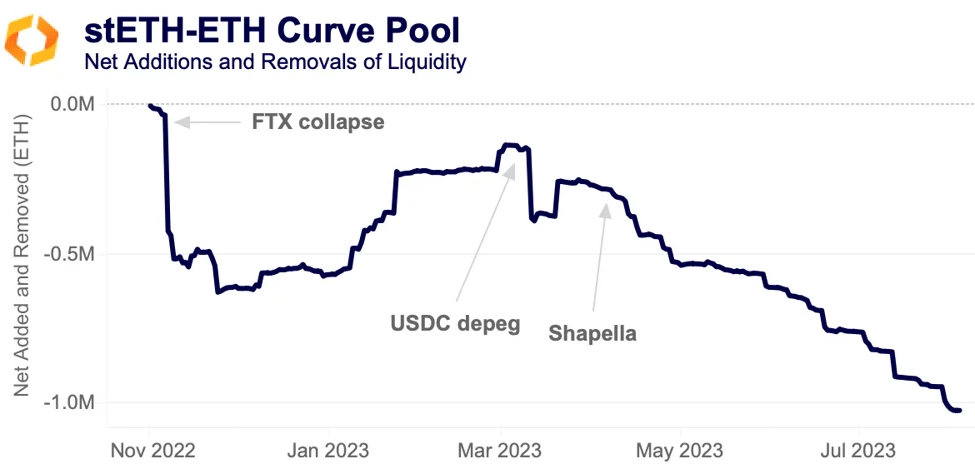
The largest drop in July came on the 12th when an address linked to Nexo removed about 100k tokens. Currently, there are 105k ETH and 106k stETH in the pool. The longer negative trend has been driven by the Lido DAO halting LDO token incentives to the pool. Previously, these incentives had made up for the lost yield that liquidity providers faced when joining this pool. This phenomenon and its implications were explored in a recent Deep Dive. For the first time in months, stETH-ETH is no longer the largest pool by TVL; pole position now belongs to FRAX-USDC at $450mn.
2023 has been a tough year for trade volume
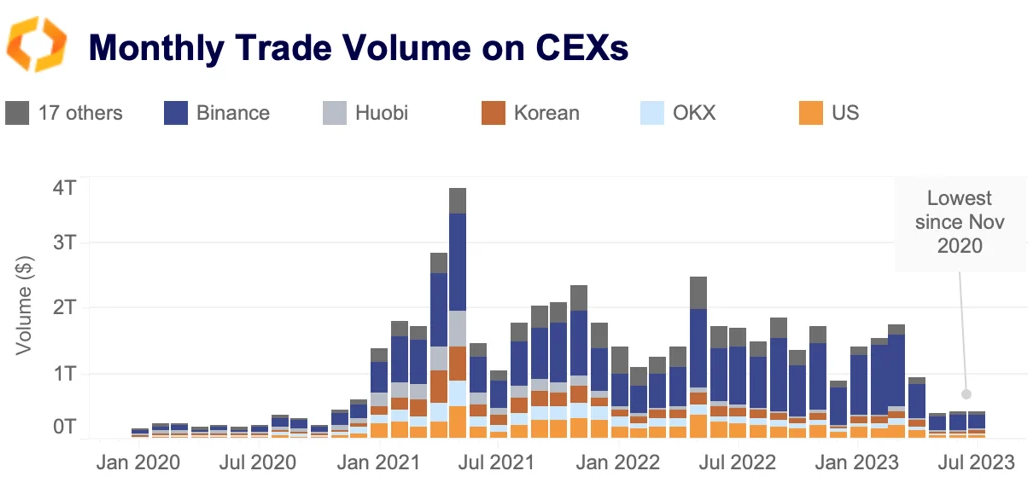
Despite BTC surging by 75%, trade volume continued to fall in 2023 with nearly all exchanges registering double-digit declines in July relative to the year before. This has been mirrored by a collapse in long-term volatility and suggests overall market participation remains low.
U.S. exchanges (orange) registered the strongest drop in volume of around 80% on average. Coinbase saw a smaller decline in trade volume compared to the broad crypto market as it benefited from a flight to quality after the SEC lawsuit against Binance.US.
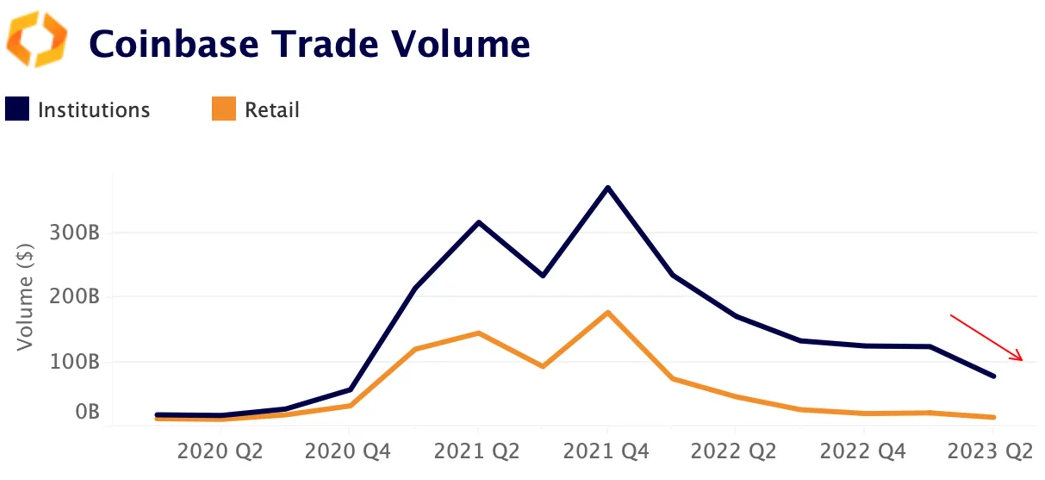
However, its earnings call last week revealed a strong decline in altcoin and institutional trading, suggesting the adverse regulatory environment and bear market has had an impact on the exchange. This has been mirrored by a steady increase in the share of BTC trading, which rose to 40% in Q2, from 32% in Q1, reaching its highest level since Q4 2020.
Memecoins take off
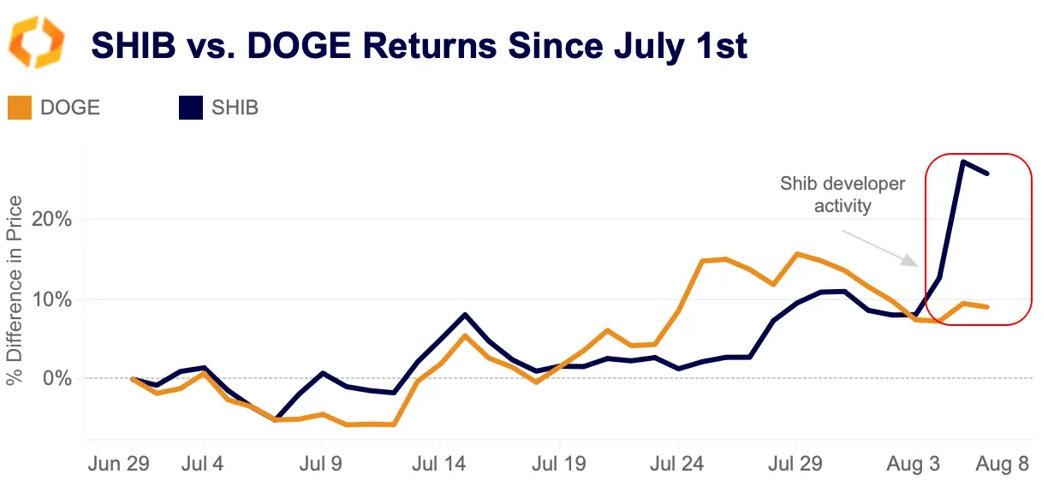
SHIB is no joke. At least that’s what the memecoin’s developers are striving for after announcing a new protocol for digital identity and starting tests for a bridge to the Ethereum network. SHIB is currently up 25% since the start of July.
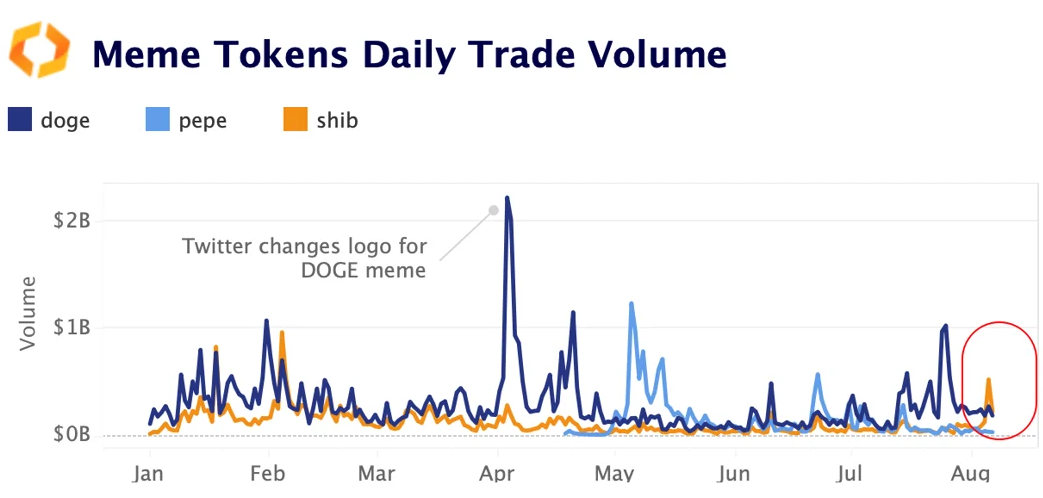
However, despite the price surge, memecoin trade volume remained lackluster in July despite Twitter-related catalysts boosting DOGE prices throughout the month. DOGE trade volume doubled to $8bn in July but remained below this year's monthly average of $11bn. SHIB trade volume was flat on the month at $1.7bn even though the upcoming Shibarium upgrade is expected to address the network’s congestion and scalability issues, boosting its attractiveness. The now third largest meme token by market cap, PEPE, has also lost steam with volumes down 70% relative to May’s highs.
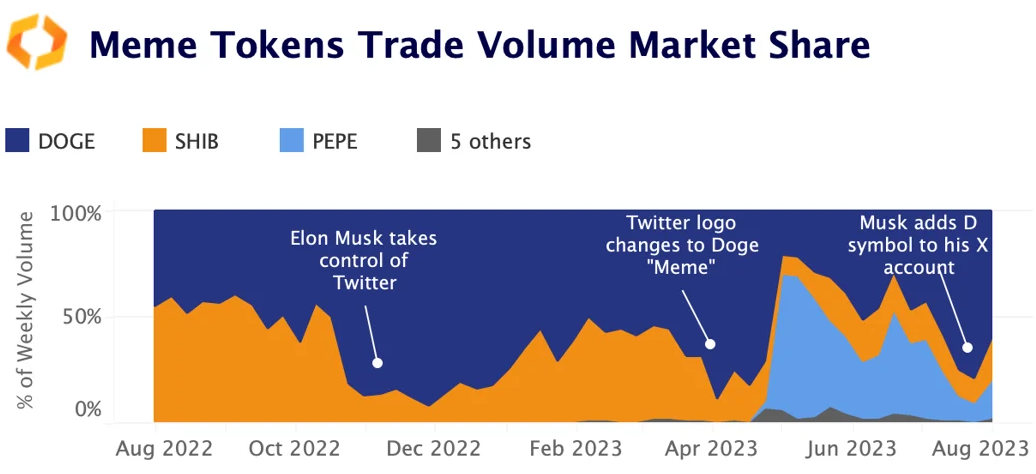
Looking at the market share of major meme-tokens, despite the emergence of PEPE, DOGE is by far the dominant token with 60% market share, followed by SHIB and PEPE which both account for around 18% as of end-July.




BITO underperforms spot BTC
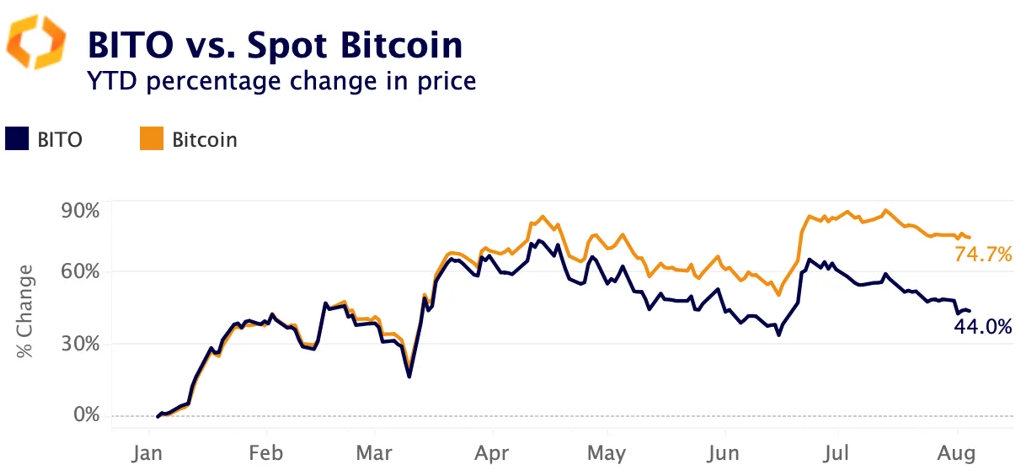
The largest U.S. traded BTC futures-backed ETF – ProShares BITO — has underperformed BTC spot prices this year, reviving concerns around its tracking performance. Futures-backed ETFs such as BITO purchase future contracts and must roll over their exposure every month. During bull markets, rolling costs can increase significantly as next month contracts typically trade at a premium relative to the nearest expiry (a phenomenon known as contango bleed).
ProShares has stated that the fund's interest income from cash holdings has largely compensated for the higher rolling costs thus far, but the persisting contango bleed could arguably make the fund more expensive and less suitable for long-term BTC exposure.
There has been a rebound in interest in the U.S. crypto ETF market after several prominent asset managers filed for spot BTC ETFs in June. According to some analysts the spot ETF has a 65% chance of being approved. Last week, seven major asset managers filed for a futures-based ETH ETF, suggesting that institutional interest is expanding.