

If you watched only crypto token charts in 2026, you saw a bruising retreat. If you watched on-chain settlement rails, you saw Wall Street move in.
That split defines this year. After peaking near USD 126,000 in October 2025, Bitcoin plunged 54% to a July trough around USD 58,000. It stabilized briefly in the USD 62,000 to USD 65,000 range in mid-November. It then slipped back below USD 60,000 at the time of writing. Total market capitalization stayed pressured between USD 2.1 trillion and USD 2.5 trillion, and sentiment remained in extreme fear.
Yet this downturn broke from past crypto winters. In 2018 and 2022, drawdowns exceeded 75%. In 2026, losses stayed shallower while institutional infrastructure expanded underneath the red candles. Crypto accelerated its transition from a relatively independent speculative asset into a regulated asset class integrated with traditional finance.
Moving from speculation to regulation
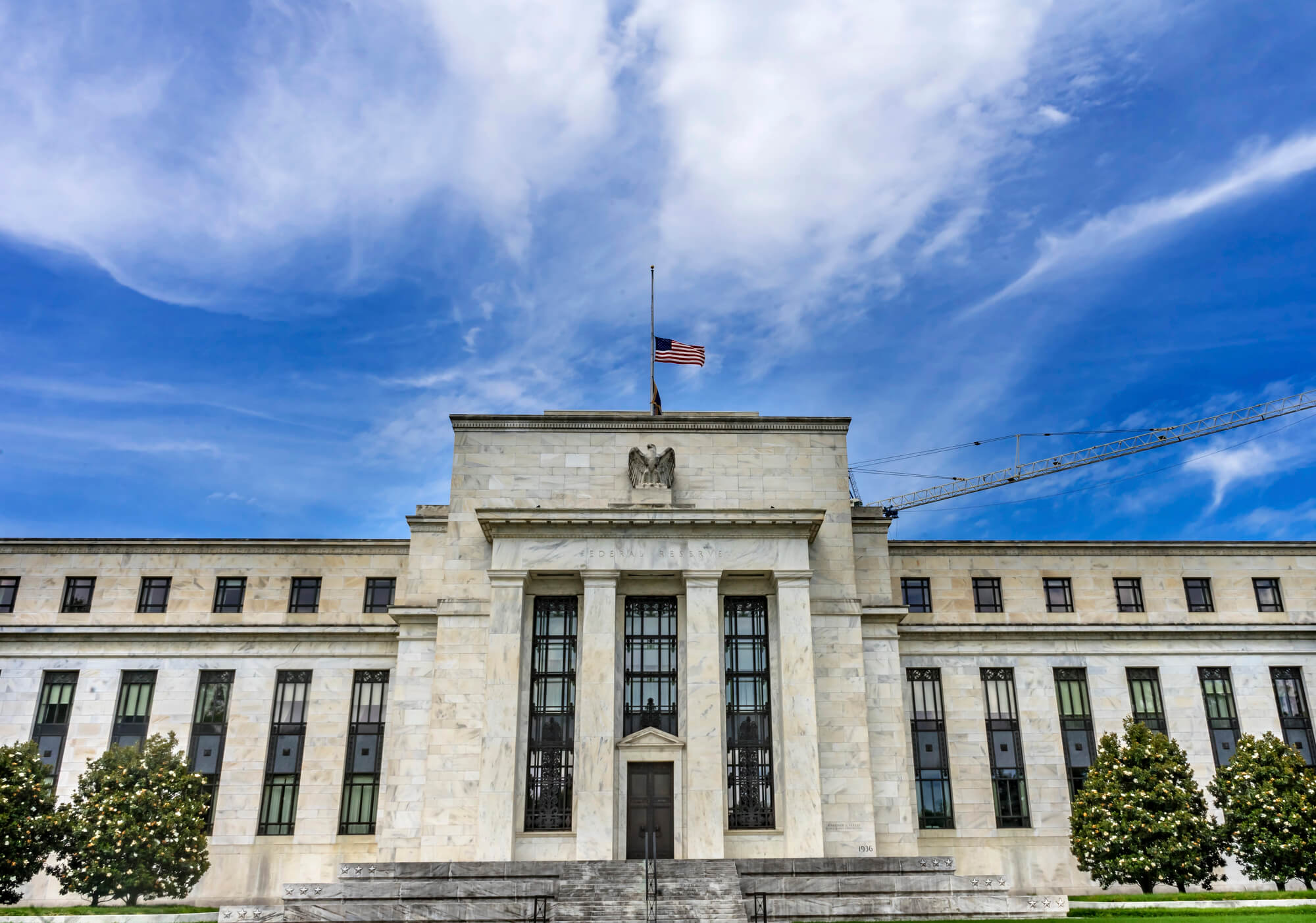
Macroeconomics dictated price throughout 2026. You no longer track four-year halving cycles as a standalone driver to predict market direction. You watch the Federal Reserve. With consumer inflation hovering near 3.7% and 10-year Treasury yields pushing 5%, Bitcoin competes directly with a risk-free rate approaching 4%. AI investment propped up the broader economy, giving the Fed room to hold rates higher to combat inflation. The Fed held rates steady at the end of October with a hawkish tone. Prediction markets then priced in tighter policy, pushing Bitcoin briefly to USD 65,020 intraday by mid-November. Today, Bitcoin trades as a high-beta extension of traditional risk assets. It tracks U.S. equities, inflation expectations, and dollar liquidity closely.
At the same time, regulators cleared major compliance barriers. EU MiCA entered full force while implementation of the U.S. GENIUS Act advanced, establishing clear standards for stablecoin reserves and disclosures. Even while broader market-structure bills remained unresolved, this core clarity gave institutions enough confidence to deploy capital on-chain. Spot ETFs normalized institutional entry. Crypto infrastructure also shifted beyond pure trading to act as a settlement and collateral layer for traditional assets.
Quiet growth behind the scenes
While risk tokens struggled, stablecoins and tokenized real-world assets expanded steadily in both scale and usage. Stablecoin market capitalization grew modestly to roughly USD 287 billion to USD 310 billion. Yet adjusted monthly transfer volume surged 41.4% between January and September 2026.
Higher turnover of existing balances drove this growth. Asia-Pacific accounted for 50.8% of tracked payment corridor volume. The region relied mostly on USD stablecoins for cross-border payments, remittances, and B2B settlements. Visa and Mastercard also expanded their pilots. Meanwhile, institutions and protocols parked idle stablecoins in tokenized U.S. Treasuries to earn yield and settle trades 24/7 without leaving the blockchain. Total tokenized real-world assets grew 51% to between USD 38.6 billion and USD 39.2 billion. Tokenized U.S. Treasuries led with USD 14 billion across BlackRock's BUIDL, Franklin Templeton's BENJI, Ondo's USDY, and Circle's USYC, alongside expanding private credit.




Bitcoin's relative crown
Capital largely bypassed altcoins in 2026 and concentrated in Bitcoin. Make no mistake: Bitcoin did not take center stage because it attracted massive waves of new capital. It took center stage because it holds the strongest institutional consensus in a contracting market. ETFs solved custody, taxation, brokerage access, and private-key management. In addition, friendlier U.S. regulation made Bitcoin the lowest-cost, most liquid digital asset for institutions to hold.
However, the flow data is more complicated. Spot Bitcoin ETFs posted a record USD 5.4 billion in net outflows during the first half of 2026. Flows turned briefly positive in late September before reversing into heavy November outflows amid rate-hike expectations. That left year-to-date cumulative net outflows at USD 1.56 billion as of November 13, 2026. Corporate treasury buying also faded, with Strategy executing phased sales starting in late May to cover preferred-stock dividend pressure. Bitcoin keeps its relative strength today because institutions typically sell it last when cutting risk and buy it first when returning.
Crypto fundamentals take over in 2026
High interest rates raise the opportunity cost of holding capital. Token saturation also dilutes attention, while institutional desks evaluate assets through strict valuation frameworks. As a result, speculative narratives collapsed in 2026.
According to DefiLlama, crypto protocols generated roughly USD 11.68 billion in on-chain revenue so far this year. That puts full-year totals near USD 13.9 billion. Using revenue for buybacks became the primary way to connect business performance with token price. Hyperliquid, for example, directed the bulk of its revenue toward HYPE token buybacks.
Generating revenue alone does not automatically lift a token's price, however, because value-capture mechanics remain unclear across many protocols. The classic, broad-based altcoin season will not reappear in the short to medium term. Instead, future altcoin moves will unfold as differentiated, structural rallies. In those rallies, capital concentrates strictly in the minority of projects with real revenue, clear value capture, and institutional access channels.
Disclaimer: This article is provided for general informational purposes only and does not constitute investment, legal, or financial advice, nor an offer or solicitation to buy or sell any financial instruments or digital assets. Any views expressed are based on current market observations and are subject to change. Past performance is not indicative of future results. Digital assets are volatile and may not be suitable for all investors. Readers should conduct their own independent research and seek professional advice before making any investment decisions. Restrictions may apply.