
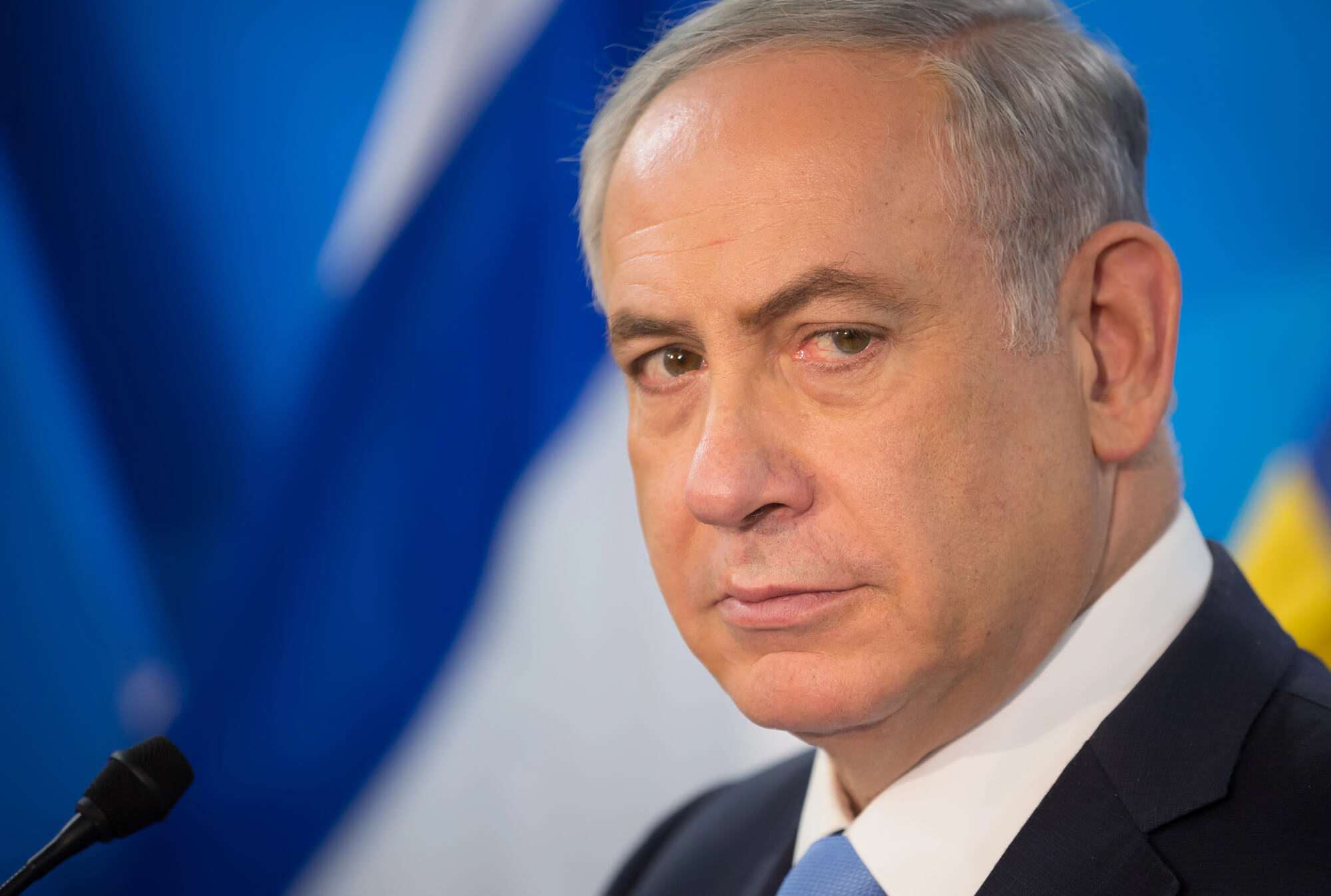
Israeli Prime Minister Benjamin Netanyahu says he ordered a blockchain and crypto plan to prepare the economy for possible sanctions. However, the Bank of Israel considers crypto unsuitable for evading sanctions and has publicly contradicted the head of government.
Sanctions cut states and companies off from the banking system and from international payments. Cryptocurrencies, by contrast, run on blockchains without a bank as intermediary, so they are seen as a possible workaround. As prime minister, Netanyahu leads a coalition headed by his Likud party. He made the remark in October 2026 in an interview with the broadcaster Channel 10, conducted by Roy Katz. Earlier, in September, the UK, France and Canada announced plans to block imports from Israeli settlements in the West Bank. Besides the central bank, more than 100 economists opposed the initiative in an open letter. At the same time, Israel faces a parliamentary election on Tuesday, October 27, 2026. Polls point to a stalemate.
Netanyahu confirms a sanctions plan with blockchain, but no details
In the interview, Netanyahu first spoke of possible sanctions against Israel, explicitly including bank sanctions. The country therefore had to prepare an economy that could get around such measures. Asked whether blockchain was an alternative, he said yes.
"One of them, certainly. I have already asked for a plan to be prepared for that." - Benjamin Netanyahu, Prime Minister of Israel (translation of the Hebrew transcript by The Block)
According to Reuters, he also confirmed when pressed that he meant cryptocurrencies, and named blockchain technology as a further option. The prime minister left open what the order actually covers. He named neither the people in charge nor a specific blockchain or currency. And there is no timeline for implementation either. So far, then, there is a statement of intent, but no plan that can be checked.
The remark sits within a broader argument about self-reliance. In the same interview, Netanyahu also warned that US military aid would end at some point. It was only a matter of time, he said. Consequently, Israel had to be able to produce its own ammunition and weapons. He said he had added 400 billion shekels (around USD 129 billion) to the defense budget for the coming years. Netanyahu also praised Donald Trump as the friendliest US president there has ever been. He doubted that another like him would ever follow.
Central bank and over 100 economists push back
The Bank of Israel responded with a public statement on the weekend after the interview. Cryptocurrencies cannot serve as a way to evade sanctions, the central bank stated. Instead, policy should focus on measures that make sanctions unnecessary. The right course for the economy is therefore to preserve relations with key trading partners. That also means preventing sanctions and their consequences. Such a public rebuke of its own government by the central bank is rare.
In addition, more than 100 economists signed an open letter against the plan. The signatories include former Bank of Israel officials, former central bank governor Jacob Frenkel and several Nobel laureates. They warn of higher unemployment, falling foreign investment and the loss of Israel's economic standing. For comparison, they point to South Africa, Iran and Russia.
The opposition also seized on the initiative. Gadi Eisenkot, Netanyahu's main challenger, called the plan "madness" and spoke of a "BibiCoin policy" that drives companies abroad. Yair Lapid also sharply criticized the prime minister. The pushback thus comes from the central bank and the economic establishment, not just from the rival camp.



Why crypto sanctions take hold at exchanges
Russia offers a well-documented case study. The ruble-backed stablecoin A7A5 launched in January 2025. Its issuer was the Kyrgyz firm Old Vector, and deposits at the sanctioned Promsvyazbank backed it. According to Elliptic, the token processed transactions worth more than USD 100 billion in its first year. Back in March 2025, the US, Germany and Finland had seized the domains of the exchange Garantex. They also froze more than USD 26 million. In August 2025, the US agency OFAC then sanctioned Old Vector, A7 LLC and Grinex, the successor exchange to Garantex. Later, in October 2025, the EU banned transactions with A7A5 in its 19th sanctions package. Elliptic puts the drop in volume by June 2026 at 96% from the peak. Furthermore, the 20th package prohibits business with all Russian and Belarusian crypto service providers.
In Iran's case, by contrast, the pressure targets a stablecoin issuer. Tether says it froze almost USD 550 million in USDT in 2026. US authorities link these funds to Iran's central bank and sanctions networks. Moreover, OFAC sanctioned the exchange Nobitex and three other Iranian trading venues in June 2026. A US Senate report shows how heavily the network depended on one issuer. It found that 84% of 846 Iran-linked wallets used USDT almost exclusively.
What gets lost in the debate is where sanctions actually bite in crypto. Elliptic's analyses suggest that authorities target the points of transition: exchanges, stablecoin issuers and fiat on-ramps. Russia did gain room to maneuver through crypto for a time. Yet it lost that room as soon as OFAC and the EU stepped in. In Iran, Tether's freezes and the sanctions on exchanges narrowed the room considerably. Applied to Israel, this logic suggests even less room. Israel has a regulated economy, and its banks sit deep inside the Western financial system. Anyone using dollar stablecoins from Tether or Circle would stay within reach of the issuers and thus of US authorities.
Israel's crypto infrastructure stays inside the banking system
Israel's known crypto projects run within the regulated system. In March 2025, the Bank of Israel published a preliminary design for a digital shekel. A decision on issuance is still pending, though. The central bank expects a recommendation to the governor toward the end of the year. As a central bank digital currency, the shekel would be part of the banking system by design. It is therefore no route around sanctions. Crypto service providers likewise need a license from the Capital Markets Authority. The securities regulator ISA plans to extend its definition of securities to digital assets, which affects around 150 firms. BILS, the first stablecoin pegged to the shekel, has been running on Solana since March 2024. Its provider is Bits of Gold.
Politically, the initiative lands in an open race. Polls show neither Netanyahu's coalition nor the opposition alliance reaching the 61 seats needed for a majority. In the latest Maariv poll, the opposition has 54 seats and Netanyahu's bloc 48. There, Eisenkot's party Yashar leads with 22 seats ahead of Likud with 19. Still, the pro-Netanyahu broadcaster Channel 14 sees Likud much higher. On that same channel, Netanyahu said after the criticism that he hears the pushback and takes it into account. So far, he has named no one in charge, no technology and no timeline. As long as that remains the case, it is unclear whether the order will turn into a concrete project.