Close Menu
Crypto Valley Journal
    Facebook X (Twitter) Instagram
    Crypto Valley Journal
    • Hot Topics
      • News
      • Minds
    • Focus
      • Background
      • Blockchain
      • Legal & Compliance
      • Non-Fungible Token (NFTs)
    • Investing
      • Markets
      • Financial Products
      • Decentralized Finance (DeFi)
      • Exchange overview
    • Education
      • Basics
      • Glossary
      • Politicians on crypto
    • Statistics
      • Bitcoin-ETF-Flows
      • Ethereum-ETF-Flows
      • Crypto market data
      • On-chain data
    • Academy
      • Overview
      • Part 1: Blockchain
      • Part 2: Money
      • Part 3: Bitcoin
      • Part 4: Cryptocurrencies
      • Part 5: Decentralized Finance
      • Part 6: Investing
    • English
      • Deutsch
    Crypto Valley Journal
    You are at:Home » Focus » Legal & Compliance » China announces harsh crackdown on crypto assets and stablecoins
    China announces harsh crackdown on crypto assets and stablecoins

    China announces harsh crackdown on crypto assets and stablecoins

    By Editorial Office CVJ.CH on 1. December 2025 Legal & Compliance

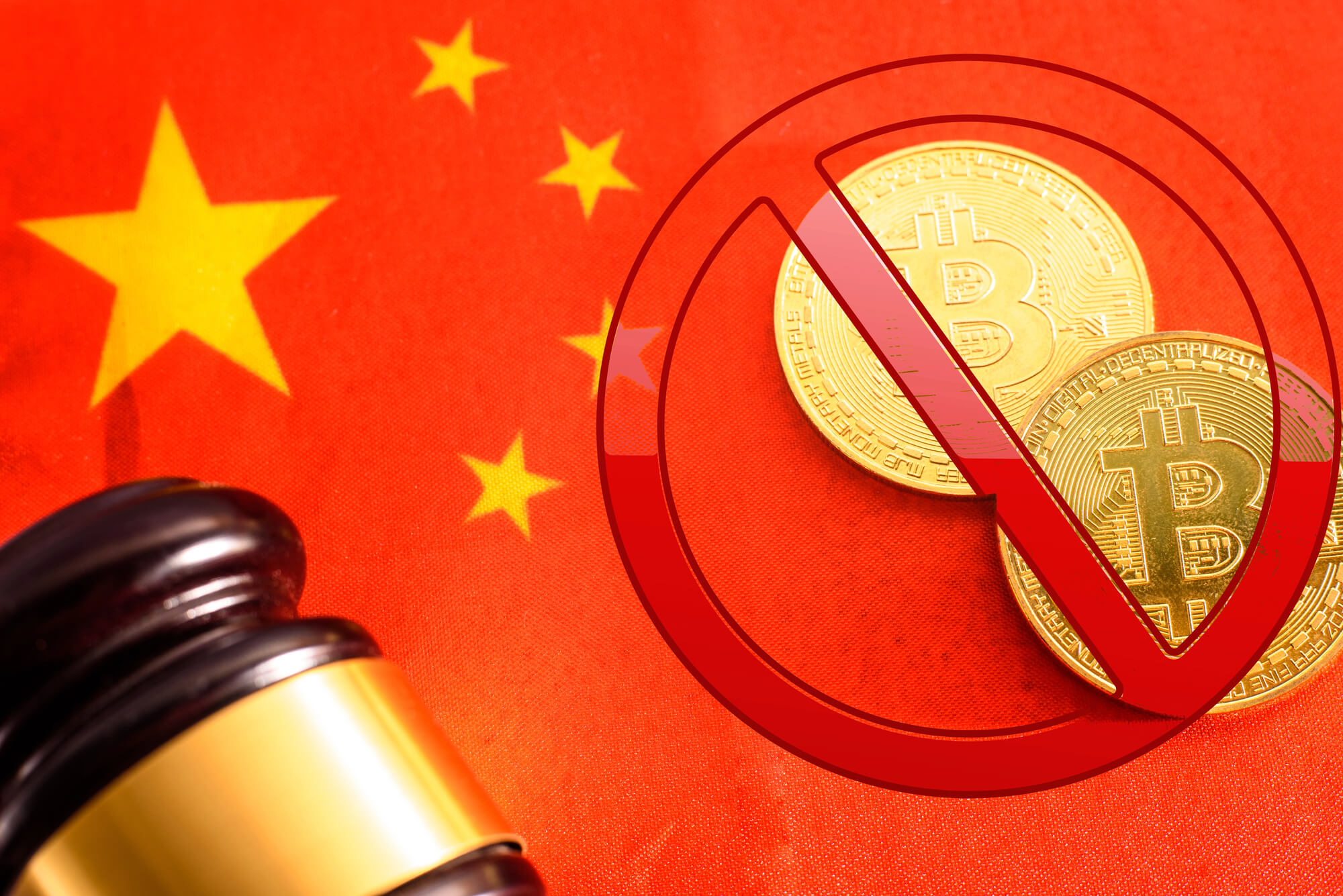
    The People’s Bank of China (PBoC) has reaffirmed its strict stance on cryptocurrencies and announced a new initiative. Following a recently held government meeting, it plans to consistently pursue violations of the crypto ban - with a particular focus on stablecoins.

    In a joint session with around a dozen government agencies, China’s central bank declared that virtual currencies - including stablecoins - still do not have the status of legal tender. Activities involving the trading, issuance, or transfer of such currencies are considered illegal financial operations. Stablecoins in particular are viewed as problematic, as many providers fail to implement sufficient measures for customer identification and anti-money laundering. The central bank announced heightened inspections, investigations, and potential sanctions to protect financial stability and capital flows, according to a Reuters.

    Subscribe to our newsletter

    The best articles of the week, directly delivered into your mailbox.

    Why the focus is on stablecoins

    The PBoC describes stablecoins as potential vehicles for money laundering, fraud, and illicit capital transfers. Unlike traditional cryptocurrencies, the systemic risk is higher due to their peg to real fiat currencies combined with a lack of regulatory oversight. This enables transfers that could circumvent traditional capital controls. For this reason, related business activities are to be rigorously suppressed.

    To implement this, China has announced that it will tighten existing bans and enhance cross-agency cooperation - including financial regulators, police, and judicial authorities. Monitoring digital payment flows, freezing accounts, banning token issuance, and imposing sanctions are expected to be part of the strategy.

    These measures are likely to have significant consequences for crypto companies, stablecoin projects, and cross-border transfers - not only within China. Companies in Hong Kong and internationally active providers must also expect increased scrutiny and potential withdrawal from the Chinese market.

    Ray Dalio advises 10 to 15% gold and a small Bitcoin position, because he expects a US debt crisis within about three years. Minds

    Star investor Ray Dalio considers Bitcoin inferior to gold

    The Ethereum Foundation's Protocol Cluster rated 62 EIPs and set December 2029 as the target for a quantum-safe Ethereum base layer. Background

    Ethereum targets a quantum-safe blockchain by 2029

    Financial Products

    Memecoins on Robinhood Chain distort tokenized stock prices

    What separates Dogecoin from Bitcoin is its unlimited supply, and the 2013 satire coin now trades through its own US spot ETF. Basics

    What is Dogecoin? From satire project to ETF asset

    Ray Dalio advises 10 to 15% gold and a small Bitcoin position, because he expects a US debt crisis within about three years. Minds

    Star investor Ray Dalio considers Bitcoin inferior to gold

    The Ethereum Foundation's Protocol Cluster rated 62 EIPs and set December 2029 as the target for a quantum-safe Ethereum base layer. Background

    Ethereum targets a quantum-safe blockchain by 2029

    Implications for markets and regulators

    Since the mining and trading ban in 2021, China has maintained its restrictive course. The new initiative shows that authorities not only intend to enforce existing rules but also actively target new forms of digital assets. Beijing is sending a clear message: digital currencies, especially stablecoins, will not be tolerated - regardless of whether they operate in a decentralized or peer-to-peer manner.

    From a global perspective, this once again highlights how differently countries regulate cryptocurrencies. While in some jurisdictions stablecoins and tokenization are seen as innovation, others enforce a zero-tolerance policy - with repercussions for people, companies, and financial flows worldwide.

    Share. Facebook Twitter LinkedIn Email Telegram WhatsApp

    About the author

    Editorial Office CVJ.CH
    • Website
    • Twitter
    • LinkedIn

    Since 2018, the editorial team at Crypto Valley Journal has been reporting from Zug - the heart of Switzerland’s Crypto Valley - on Bitcoin, cryptocurrency, blockchain, and regulatory developments in digital assets. Behind the publication’s collective editorial voice is a team of writers with backgrounds in financial markets, law, and technology.

    Related Articles

    The procedural vote on the Clarity Act missed the 60-vote threshold in the Senate, with four Republicans voting against their own caucus.

    Clarity Act: US Senate rejects the crypto bill

    The revised Clarity Act runs to 630 pages ahead of the first Senate vote on September 15, but Democrats have not yet backed it.

    Clarity Act: Senate revises bill ahead of September vote

    Iran's central bank tolerates crypto in export payments while the US Treasury has sanctioned four Iranian exchanges handling 78% of volume.

    Iran tolerates cryptocurrencies for export payments despite sanctions

    FINMA is reviewing Revolut's application for a Swiss banking license that would bring salary accounts, a local IBAN and deposit insurance.
    16. September 2026

    Revolut applies for a Swiss banking license with FINMA

    The procedural vote on the Clarity Act missed the 60-vote threshold in the Senate, with four Republicans voting against their own caucus.
    16. September 2026

    Clarity Act: US Senate rejects the crypto bill

    CoinEx shuts down its crypto exchange, ends spot trading on September 29 and lets users withdraw funds until December 22, 2026.
    15. September 2026

    Crypto exchange CoinEx shuts down after nine years

    twitter image button instagram image button linkedin image button youtube image button

    About Crypto Valley Journal
    About Crypto Valley Journal

    On the pulse of the movement

    • Academy
    • Contact
    • Advertising
    • About us
    • Partner
    • Imprint
    • Privacy
    • Disclaimer
    Search

    Type above and press Enter to search. Press Esc to cancel.