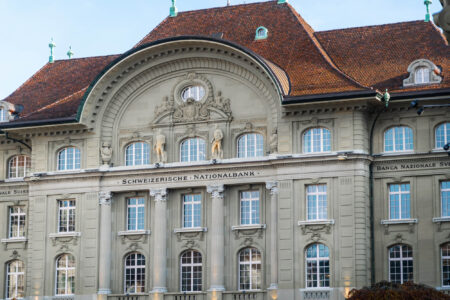
The Swiss Bankers Association (SBA) has published its official position on the planned amendment to the Financial Institutions Act (FinIA). In it, the association supports the goal of strengthening Switzerland's competitiveness in the stablecoin sector.
But the SBA criticizes a central point of the preliminary draft. Under the current proposal, banks cannot issue regulated stablecoins directly. Instead, they would need to establish a separate legal entity as a payment institution to issue "value-stable crypto-based means of payment." The SBA considers this so-called licensing cascade unjustified on substantive grounds. Banks already play a central role in payment transactions and face stricter supervisory requirements than the newly proposed licensing categories.
Two new licensing categories in the FinIA preliminary draft
The Federal Council opened the consultation on the FinIA amendment in October 2025. The consultation period ran until February 6, 2026. At its core, the draft introduces two new licensing categories. Both fall under FINMA supervision going forward. Previously, self-regulatory organizations oversaw crypto actors.
The first category covers payment institutions. It replaces the existing fintech license and allows the issuance of regulated stablecoins. Meanwhile, the previous limit of CHF 100 million for client funds no longer applies. Client funds can be segregated in bankruptcy and flow as sight deposits to banks or into high-quality liquid assets. In addition, the law prohibits interest payments on client funds, similar to the GENIUS Act in the United States.
The second category encompasses crypto institutions for custody, trading, and market-making with crypto assets. This specifically covers assets with trading characteristics such as Bitcoin, Ether, or foreign stablecoins. Regulated stablecoins require full backing by equivalent assets. Issuers must redeem them at par value on demand. They must also be able to block transactions, freeze funds, and reclaim them, even against the holder's will.




Stablecoins as a strategic project for the financial center
The SBA had already published an expert report in April 2025 led by Chief Economist Martin Hess, titled "Stablecoins in Switzerland." Its central thesis sets a high bar.
"A regulated, trustworthy Swiss franc stablecoin could represent a strategic project for the future of banks, the economy, and society." - SBA expert report
The report identifies opportunities in programmable financial flows, reduction of transaction costs, and accelerated payment settlement. Still, it also names risks. Large-scale stablecoin issuance could undermine the intermediary role of banks between lenders and borrowers. Every stablecoin that end users hold instead of bank deposits reduces the bank's capacity to refinance loans. A significant outflow of deposits could consequently raise refinancing costs for bank lending, with corresponding effects on the economy.
According to the report, the mitigation lies in the backing model. If stablecoins are fully backed by bank deposits, no direct disintermediation risk exists. The bank continues to use the liabilities toward the issuer for its lending business.
Competitive pressure from EU regulation and global growth
Pressure on Switzerland is mounting. In the EU, the Markets in Crypto-Assets Regulation (MiCAR) has been fully applicable since December 2024. Stablecoin provisions took effect in June 2024. By February 2025, authorities had revoked licenses from over 50 crypto firms and imposed more than EUR 540 million in fines. However, MiCAR does not include an equivalence principle. A comparable Swiss regulation therefore does not help with the EU licensing process.
Globally, stablecoin transaction volumes rose 72 percent in 2025 to USD 33 trillion. USDC alone recorded USD 18.3 trillion in transaction volume. Its market capitalization grew 73 percent to USD 75 billion. The US GENIUS Act further boosted demand for regulated stablecoins.
Activity in the CHF stablecoin market is picking up. Sygnum operates the Digital CHF (DCHF), fully backed by SNB sight deposits. AllUnity announced the launch of CHFAU, the first fully MiCAR-compliant CHF stablecoin. Zug-based fintech Plusplus has already packaged the decentralized Frankencoin (ZCHF) into three investment products. Bitcoin Suisse, on the other hand, discontinued the CryptoFranc (XCHF) in August 2024. Yet demand remains limited. With a total market capitalization of USD 40 million, CHF-based tokens account for just 0.13% of the stablecoin market.
Criticism from other industry associations
The SBA is not alone in its criticism. On December 3, 2025, four industry associations submitted a joint position paper to the Federal Department of Finance. The Swiss Blockchain Federation (SBF) coordinated the paper together with the Crypto Valley Association, the Swiss Fintech Association, and the Capital Markets and Technology Association. Hans Kuhn, former General Counsel of the Swiss National Bank, led the working group.
The four associations first criticize a lack of strategic vision in the draft. Without clear guardrails, Switzerland risks falling behind in international competition. Specifically, they consider the planned regulation of crypto institutions too restrictive. The preliminary draft follows the securities dealer model. Yet this model is unsuitable for crypto business models. The associations warn of drastic market consolidation, comparable to the EU, where after full MiCAR implementation only 150 to 300 of the original roughly 3,000 crypto service providers are expected to survive.
The associations also call for a two-tier supervisory model. Supervisory organizations should oversee smaller institutions. FINMA, in contrast, should only supervise systemically important crypto institutions. Licensing procedures should take six months instead of the current 18 to 24 months. The broad definitions of crypto institutions also face resistance. They could incorrectly capture pure technology providers with no control over third-party assets. Heinz Taennler, President of the Swiss Blockchain Federation and Finance Director of the Canton of Zug, nevertheless assessed the overall direction positively.
"The direction is right. The Federal Council shows that it takes the realities of the digital financial market seriously. Yet the draft remains unclear at important points." - Heinz Tännler, President of the Swiss Blockchain Federation and Finance Minister of the Canton of Zug