Close Menu
Crypto Valley Journal
    Facebook X (Twitter) Instagram
    Crypto Valley Journal
    • Hot Topics
      • News
      • Minds
    • Focus
      • Background
      • Blockchain
      • Legal & Compliance
      • Non-Fungible Token (NFTs)
    • Investing
      • Markets
      • Financial Products
      • Decentralized Finance (DeFi)
      • Exchange overview
    • Education
      • Basics
      • Glossary
      • Politicians on crypto
    • Statistics
      • Bitcoin-ETF-Flows
      • Ethereum-ETF-Flows
      • Crypto market data
      • On-chain data
    • Academy
      • Overview
      • Part 1: Blockchain
      • Part 2: Money
      • Part 3: Bitcoin
      • Part 4: Cryptocurrencies
      • Part 5: Decentralized Finance
      • Part 6: Investing
    • English
      • Deutsch
    Crypto Valley Journal
    You are at:Home » Glossary » DApp – Decentralized Application
    DApp - Decentralized Application
    Man touching a dapps concept on a touch screen with his finger

    DApp – Decentralized Application

    By Redaktion cvj.ch on 2. April 2020 Glossary

    DApp stands for "Decentralized Application," and it is a term closely associated with blockchain technology.

    Unlike traditional centralized applications, which are operated by central entities, DApps rely on the decentralized nature of blockchain networks. A DApp or Decentralized Application utilizes smart contracts executed on the blockchain to implement the logic and rules of the application.

    "Code is Law"

    A fundamental feature of DApps is their openness and transparency. Since most DApps run on public blockchains, their source codes and transaction data can be accessed and verified by anyone. This fosters user trust in the integrity of the application.

    Another crucial characteristic of DApps is their decentralization. Operating without a central control authority, DApps are less vulnerable to failures or attacks targeting centralized servers. Users retain full control over their data and digital assets, typically through private keys granting access to their accounts.

    Diverse use cases for DApps

    An essential aspect of DApps is their interoperability. By using standardized protocols and open interfaces, DApps can seamlessly interact with other DApps and smart contracts. This enables complex applications composed of various DApps and platforms to function collaboratively as a more extensive ecosystem. Such interoperability fosters innovation and cooperation in the blockchain world, allowing users to smoothly exchange digital assets and services across different platforms.
    DApp - Decentralized Application
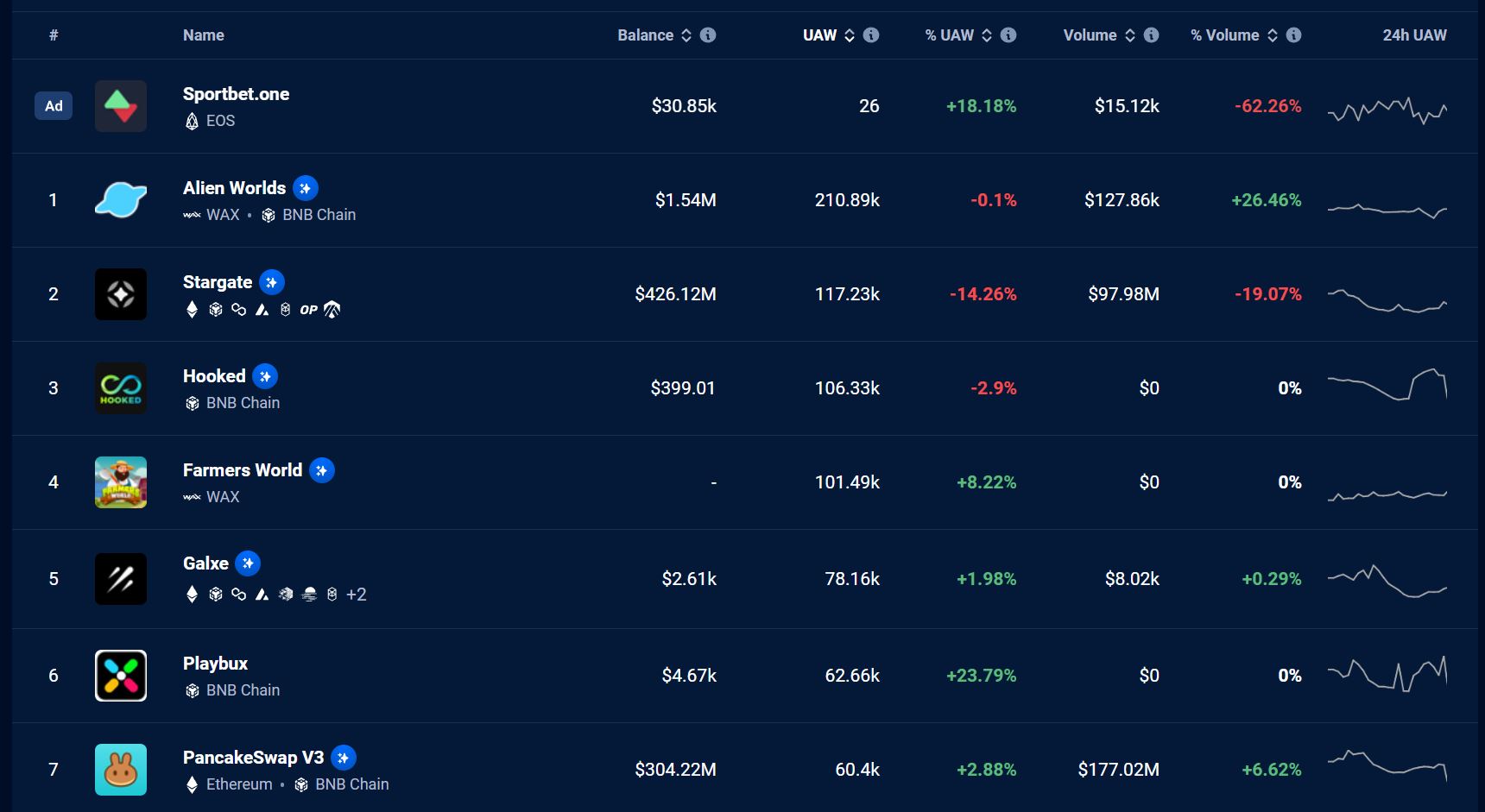
    Selection of decentralized applications from the portal dappradar.com.

    A DApp or Decentralized Application is utilized in various use cases, including DeFi (Decentralized Finance), digital identity management, supply chain tracking, online gambling, and more. Well-known platforms for DApp development and execution include Ethereum, EOS, Tron, and others.

    It is essential to emphasize that a Decentralized Application may not always be perfectly decentralized, as certain aspects may remain centralized, such as the user interface or database. Nevertheless, they have the potential to fundamentally transform the way applications are developed and utilized in different industries by providing enhanced security, transparency, and user control.


    Citi forecasts tokenized securities reaching 5.5 trillion USD by 2030, as DTCC, Nasdaq and ICE build out the underlying market infrastructure. Background
    1. June 2026

    Citi forecasts tokenized securities reaching 5.5 trillion USD by 2030

    Citi forecasts tokenized securities reaching 5.5 trillion USD by 2030, as DTCC, Nasdaq and ICE build out the underlying infrastructure.

    Tokenization opens up new ways for companies to engage investors flexibly and structure financing efficiently. Background
    27. May 2026

    Tokenized equity shares: a tax-efficient alternative to traditional equity?

    Tokenization opens up new ways for companies to engage investors flexibly and structure financing efficiently.

    Digital finance transparency relies on Proof of Reserves, Merkle trees, MPC custody and 24/7 monitoring to verify solvency and user assets.
    12. May 2026

    Transparency as the foundation of security in digital finance

    CLARITY Act DeFi
    7. May 2026

    CLARITY Act: The year’s most important crypto deal heads for a decision

    Analysis by Bitget Research on Bitcoin quantum computing risks, ECDSA exposure, NIST post-quantum standards, and BIP-360 migration paths.
    17. April 2026

    Bitcoin quantum computing: What recent developments mean for network security

    XRPL validator analyzes quantum risk: only 0.03% of XRP supply is exposed, compared to up to 35% for Bitcoin. Google sets 2029 deadline.
    14. April 2026

    Quantum risk: Is XRP more secure than Bitcoin?

    13. April 2026

    Power Shift in Crypto Exchanges: Retail Overtakes Institutional

    Entdecken Sie die Vorteile von Bitcoin im Portfolio als Werkzeug zur Renditesteigerung und zum Schutz vor Inflation.
    9. April 2026

    Bitcoin’s role within an institutional portfolio

    Popular Posts
    About Crypto Valley Journal
    About Crypto Valley Journal

    On the pulse of the movement

    • Academy
    • Contact
    • Advertising
    • About us
    • Partner
    • Imprint
    • Privacy
    • Disclaimer
    Search

    Type above and press Enter to search. Press Esc to cancel.