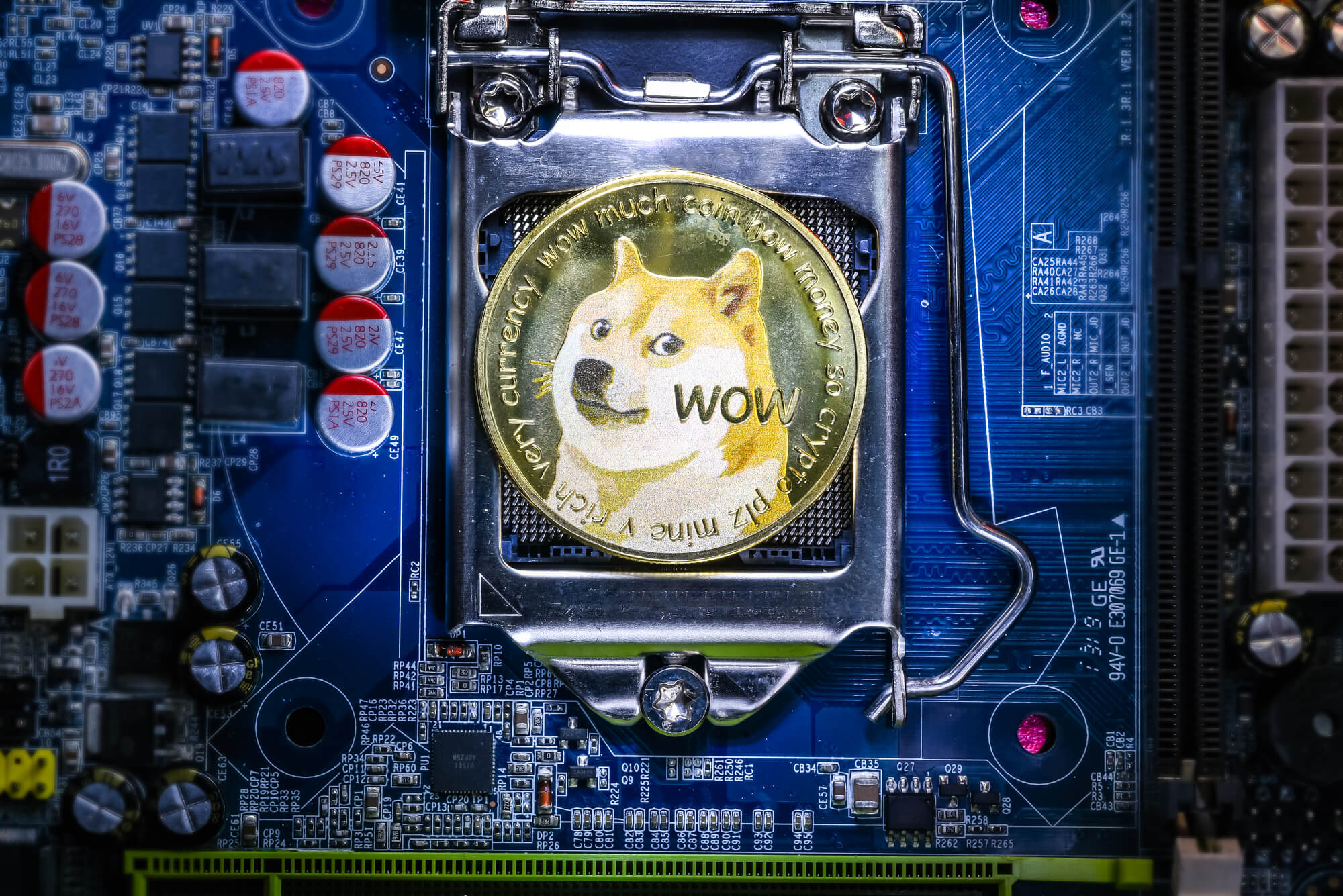
Dogecoin (DOGE) is a cryptocurrency founded as a joke in 2013 by Billy Markus and Jackson Palmer. They thought the that the cryptocurrency market was being taken far too seriously and need some fun. Dogecoin is referred to as the "memecoin," with the famous Shiba Inu dog as its mascot.
Palmer started the Dogecoin project and was soon joined by Billy Markus, who had stumbled upon the project. Markus and Palmer believed that Dogecoin could make the world of cryptocurrencies more accessible to newcomers, as at the time Bitcoin was mostly associated with the Silk Road scandal and the Dark Web.
Technical features of Dogecoin
From a technical perspective, Dogecoin is a proof-of-work (PoW) cryptocurrency like Bitcoin. Dogecoin is a Litecoin fork, that makes simplified and efficient to peer-to-peer transactions possible. Due to its foundation on the Litcoin network DOGE transactions are faster and cheaper compared to Bitcoin. Dogecoin mining requires specific hardware and transitioned from CPU to GPU and now to specialized Application-specific integrated circuit (ASIC) mining.
According to the Dogecoin explorer the network is secured by a handful of miners who account for the lion's share of the blockchain's hashrate. This is due to so-called mining pools, where miners collaborate and pool their resources, and rewards are distributed based on each miner's contribution. The mining pool strategy maintains a stable network. Unlike Bitcoin, which has a limited supply of 21 million coins, Dogecoin initially had no supply limit. However, in 2014, a fixed inflation rate of 5 trillion DOGE per year was implemented. Currently, this translates to an annual supply expansion of 6.79%.
DOGE: The mother of memecoins
In contrast to numerous other altcoins created in the years 2013 and 2014, Dogecoin has proven remarkably resilient to crypto market cycles. Much to the founders surprise, Dogecoin was almost an instant success. It gained quick popularity on sites with a strong crypto community like Reddit, and after just 2-weeks surpassed Bitcoin in total transactions per day. Although originating from a joke, Dogecoin quickly developed a large and passionate community. Today, the Dogecoin Foundation oversees the core development and is responsible for implementing the Dogecoin Manifesto.
DOGE even came to the attention of Elon Musk who’s tweets initiated multiple strong price increases of the cryptocurrency. His first DOGE related tweet was released in 2019. Over the years the market cap and price of DOGE surged, solidifying it’s dominance and making memecoins into a distinct category within the crypto world. Consequently, several imitators followed, capitalizing on Dogecoin's success. The most notable "rival" is Shiba Inu (SHIB), another memecoin featuring the same Shiba Inu dog as its mascot. Other joke cryptocurrencies like PEPE also managed to enter the top 50 cryptocurrencies by market capitalization. The category of memecoins, can be likened to the "meme stocks" of traditional financial markets.
Dogecoin rulz pic.twitter.com/flWWUgAgLU
— Elon Musk (@elonmusk) April 2, 2019