Close Menu
Crypto Valley Journal
    Facebook X (Twitter) Instagram
    Crypto Valley Journal
    • Hot Topics
      • News
      • Minds
    • Focus
      • Background
      • Blockchain
      • Legal & Compliance
      • Non-Fungible Token (NFTs)
    • Investing
      • Markets
      • Financial Products
      • Decentralized Finance (DeFi)
      • Exchange overview
    • Education
      • Basics
      • Glossary
      • Politicians on crypto
    • Statistics
      • Bitcoin-ETF-Flows
      • Ethereum-ETF-Flows
      • Crypto market data
      • On-chain data
    • Academy
      • Overview
      • Part 1: Blockchain
      • Part 2: Money
      • Part 3: Bitcoin
      • Part 4: Cryptocurrencies
      • Part 5: Decentralized Finance
      • Part 6: Investing
    • English
      • Deutsch
    Crypto Valley Journal
    You are at:Home » Glossary » XBT
    BTC and currencies

    XBT

    By Editorial Office CVJ.CH on 4. March 2024 Glossary

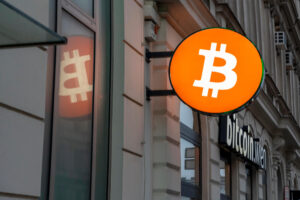
    XBT is an alternate ticker symbol for Bitcoin, commonly known by the acronym BTC. Bitcoin is a decentralized cryptocurrency created in 2009. It is the first developed and most popular cryptocurrency worldwide with the largest market capitalization in the crypto sector.

    After the introduction of Bitcoin, it was abbreviated as BTC in cryptocurrency exchanges. With further adoption of Bitcoin and becoming more known to the general public, the traditional finance (TradFi) sector set a ticker symbol according to the existing nomenclature standards. The XBT ticker follows the ISO standard which also applies for precious metals and was first used on a Bloomberg machine in 2013. XBT is considered the official international ticker symbol for Bitcoin, although BTC remains the most popular.

    Understanding the XBT ticker

    Assets use a standard nomenclature that represents the asset globally. The widely used ticker for Bitcoin, BTC, did not follow the rules of the International Organization for Standardization (ISO). The ISO 4217 standard states that the first two letters of the ticker should represent the name of the country, such as USD (United States Dollar). The standard is global for national currencies, and is also used for precious metals such as gold, platinum, silver, etc. The tickers for assets that begin with 'X' represent that these assets are transnational and traded globally. For example the globally traded precious metal gold has the ticker XAU.

    Bitcoin falls under this standardization requirement. It is a decentralized currency, not tied to any government or nation, and is often referred to as "digital gold". It operates autonomously on a peer-to-peer network that defies regulatory frameworks. According to ISO 4217 standards, Bitcoin has been described as a store of value, just like precious metals such as gold, silver and palladium. Therefore, an "X" for international goods was placed in front of the Bitcoin abbreviation "BT," resulting in the ticker XBT. XBT serves as a recognizable code for investment firms, regulators and financial institutions.


    Bitcoin overtakes gold in the US: per River's report, 49.6 million Americans own Bitcoin, while just 28.8 million still hold gold. Background
    22. July 2026

    Bitcoin overtakes gold among US investors for the first time

    Bitcoin overtakes gold in the US: per River’s report, 49.6 million Americans own Bitcoin, while just 28.8 million still hold gold.

    Digital asset security faces a new gap: crypto losses topped USD 4.70 billion in 2025, up 63%, as fraud follows multi-asset users. Background
    22. July 2026

    Digital finance has gone multi-asset. Security needs to catch up.

    Digital asset security faces a new gap: crypto losses topped USD 4.70 billion in 2025, up 63%, as fraud follows multi-asset users.

    The Chainalysis Crypto Crime Report puts illicit activity below 1% of on-chain volume, countering the myth of Bitcoin as a criminal currency.
    21. July 2026

    Myth: Bitcoin and cryptocurrencies mainly serve criminal activity

    Falling qubit estimates bring the quantum computer threat to Bitcoin closer and spark a debate over freezing Satoshi's coins.
    20. July 2026

    Quantum computers put Bitcoin’s cryptography under pressure

    Most crypto cards hide who issues them. After mapping the licensed issuers, here is why Switzerland's self-issuing model reads differently.
    8. July 2026

    The bank you never chose: who really issues Switzerland’s crypto cards

    18 percent hold crypto assets in Switzerland, an IFZ and LUKB study shows. Banks see potential for up to 1 million advisory clients.
    29. June 2026

    HSLU and LUKB study: 18% of the Swiss population hold crypto assets

    29. June 2026

    The four-year Bitcoin cycle remains intact

    The EU Parliament's ECON committee has approved the legal framework for the digital euro and ordered trilogue negotiations to begin.
    23. June 2026

    EU Parliament approves legal framework for the digital euro

    Popular Posts
    About Crypto Valley Journal
    About Crypto Valley Journal

    On the pulse of the movement

    • Academy
    • Contact
    • Advertising
    • About us
    • Partner
    • Imprint
    • Privacy
    • Disclaimer
    Search

    Type above and press Enter to search. Press Esc to cancel.