
A summarizing review of what has been happening at the crypto markets of the past week. A look at trending sectors, liquidity, volatility, spreads and more. The weekly report in cooperation with market data provider Kaiko.
The last 7 days in cryptocurrency markets:
- Price Movements: Decentralized stablecoin USDN lost its peg after allegations of market manipulation.
- Volume Dynamics: Altcoins have gained market share over the past year relative to BTC and ETH.
- Order Book Liquidity: ETH market depth increased 40% since January.
- Derivatives: Open interest has increased slightly in April following a flat few months.
- Macro Trends: Risk assets had a tumultuous week after a hawkish Fed meeting.
Bearish reversal sweeps crypto markets
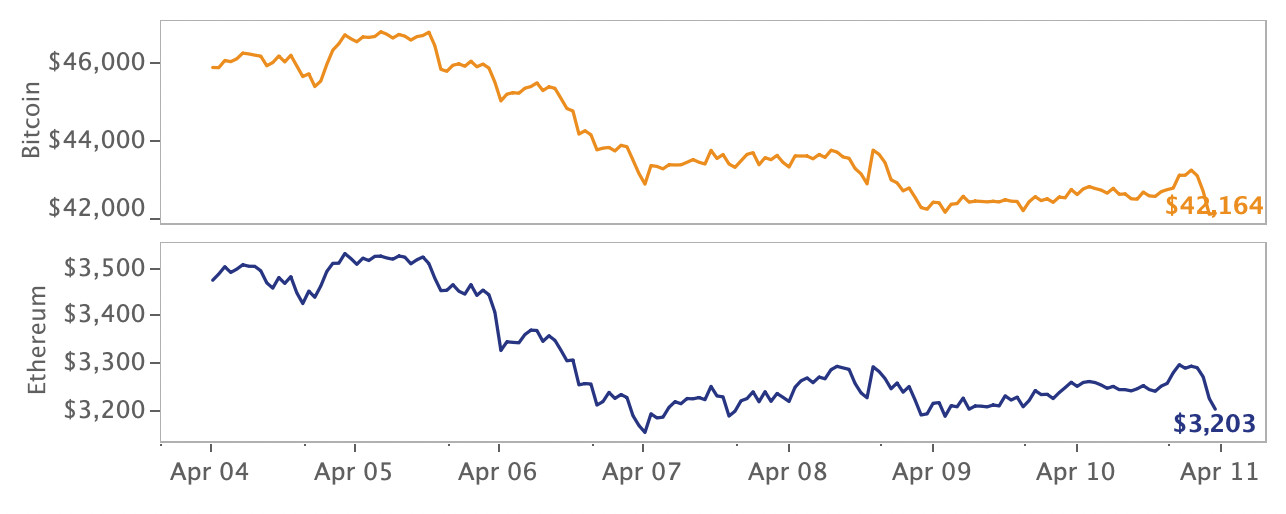
This week, hawkish Fed minutes spurred another round of market turmoil, with rate sensitive growth and tech stocks experiencing the strongest losses. After a bullish start to April, crypto markets also underwent a sharp turnaround, with Bitcoin (BTC) and Ethereum (ETH) closing the week down 8% and 7%, respectively. In industry news, FTX took a stake in a regulated stock exchange, stablecoin regulation inched one step closer in the US, and another round of Russian sanctions targeted crypto wallets.
Decentralized stablecoin USDN loses peg
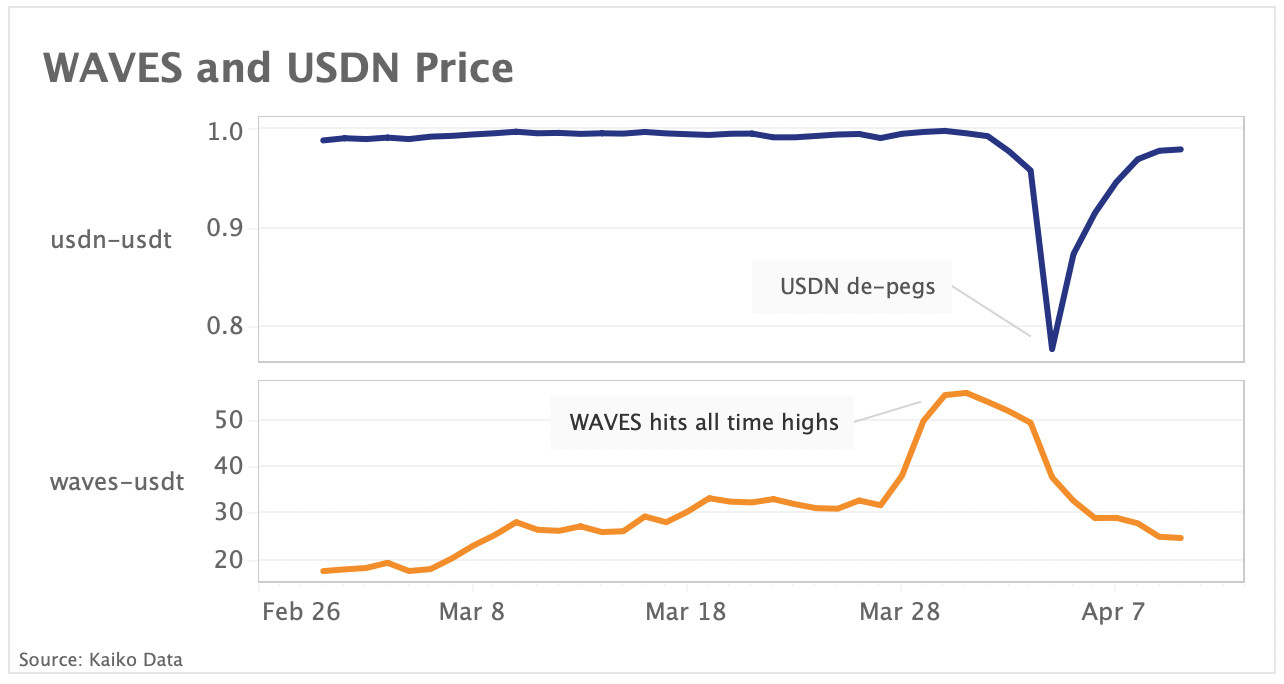
Neutrino USD (USDN), a stablecoin integrated with the Waves blockchain, lost its peg after a series of flying allegations of market manipulation. There is a long history of failed algorithmic stablecoins, which often struggle to maintain their peg, unlike centralized stablecoins such as USDT or USDC. In this case, USDN lost its peg following allegations and counter-allegations of market manipulation of the price of WAVES, the Waves blockchain’s native token.
USDN is collateralized using WAVES and relies on arbitrageurs to maintain its peg, similar to how the algorithmic stablecoin TerraUSD (UST) operates, which is collateralized with Luna. An anonymous twitter user alleged that the Waves blockchain team was manipulating the price of WAVES by using USDN for leverage. This resulted in counter-allegations from the blockchain network’s founder stating that Alameda Research - the trading arm of FTX - was manipulating WAVES and organizing campaigns to trigger panic selling.
These events led to a de-pegging of USDN, which reached lows of $0.73, and a drop in WAVES, from all time highs of $61 to around $30. Read a full recap of the wild story here. Ultimately, this case highlights the risk of algorithmic stablecoins and the ways to go before they can be safely used in crypto.
Altcoin market share surges since 2020
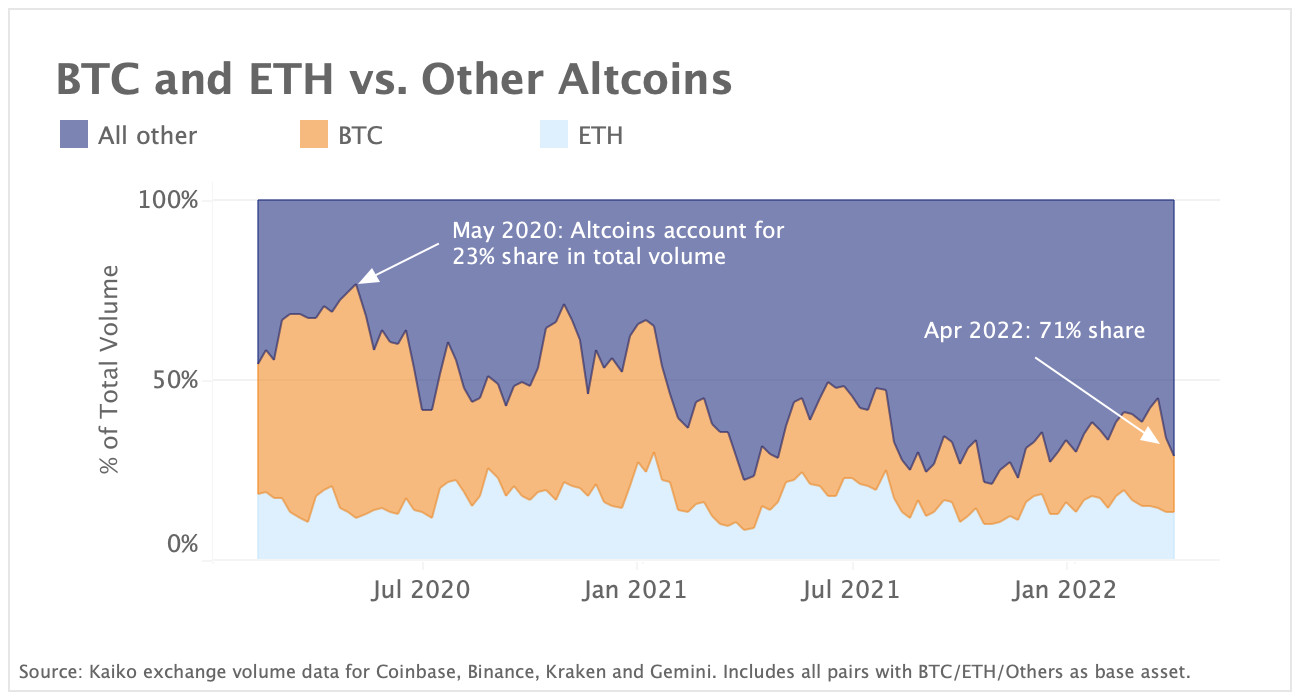
While Bitcoin has outperformed most altcoins amid the past few month's macro volatility, its market share has declined significantly over the past year and remains firmly below its 2020 average. We chart the market share of volume for all trading pairs on four exchanges - Binance, Coinbase, Kraken and Gemini. We observe that the share of altcoins (excluding Ethereum) has risen from 23% to 71% over the past two years signalling a durable shift in market structure. Bitcoin and Ethereum remain by far the most liquid crypto assets offering the easiest point of entry into crypto markets. However, an increasing number of investors are looking for broader exposure to the sector as indicated by both growing market share on centralized exchanges and the increase in altcoin-focused investment instruments.
Coinbase remains dominant U.S. exchange
Competition for the U.S. crypto market, which is a preferred on-ramp for institutional investors, is heating up amid increased regulatory attention. Over the past year, the world’s biggest exchanges have invested heavily in this lucrative market, buying Super Bowl ads, stadium sponsorships, and investing heavily in acquisitions. The most prominent entrants are FTX and Binance, which have each set up a US entity that is regulatory compliant. US traders today are unable to access the global versions of these exchanges, which is why US subsidiaries are important.
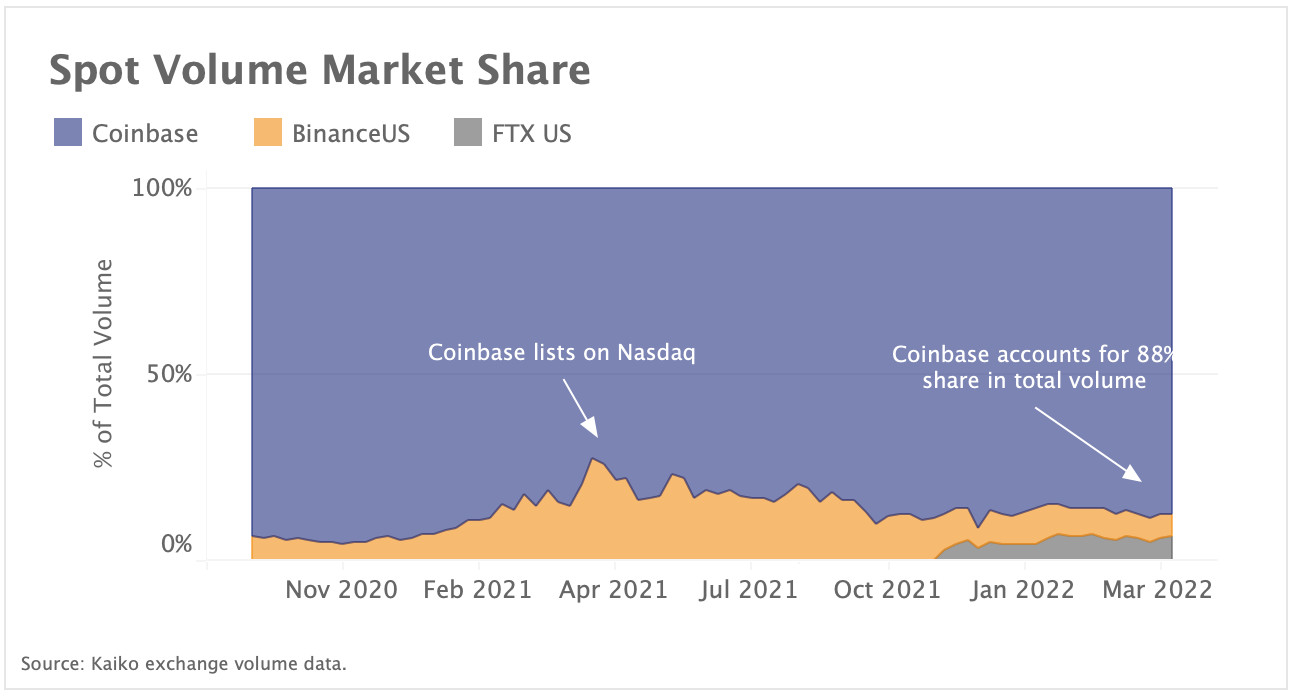
Yet, when we look at market share of volume for FTX.US and Binance.US vs. Coinbase, the dominant regulatory compliant exchange, we can observe that each has hardly made a dent. For a while, Binance.US gained a bit of market share versus Coinbase, but this has since diminished.



Altcoin spreads are improving
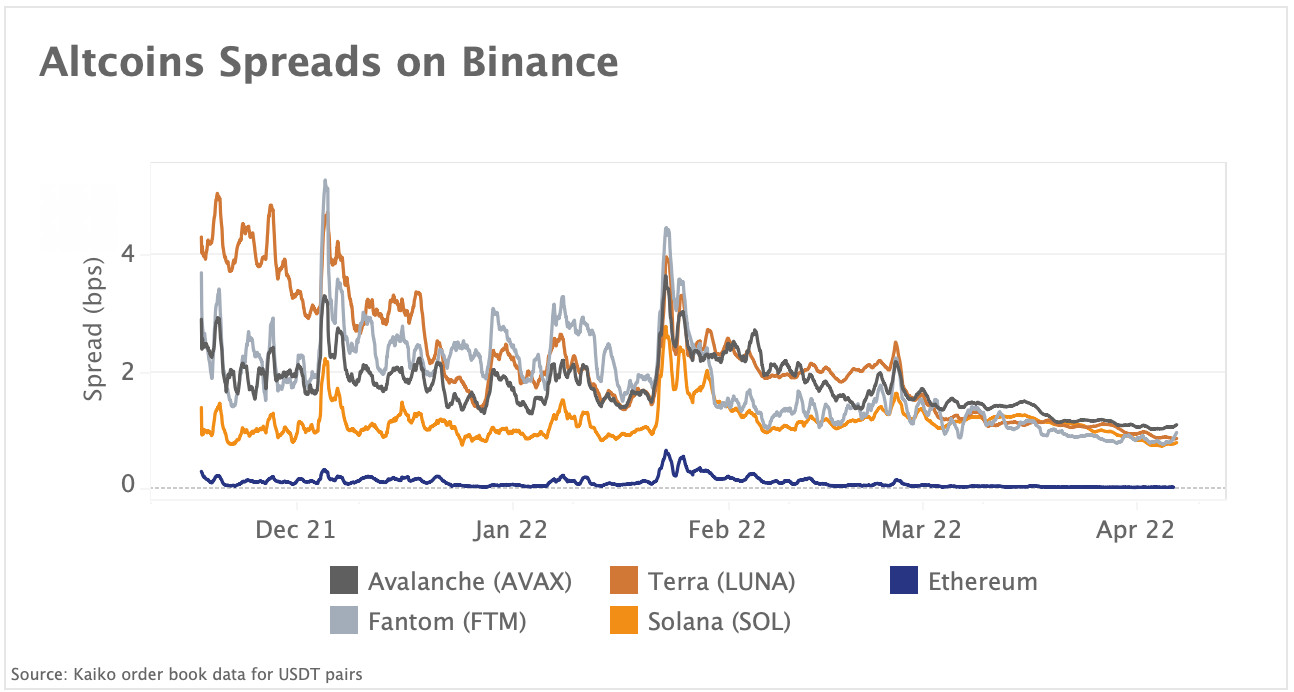
Altcoins still remain a lot less liquid than BTC and ETH pairs on the biggest global exchanges, but we can observe an improvement over the past few months for USDT pairs on Binance. We charted the bid-ask spread for a handful of tokens to get an idea of how liquidity has evolved compared with Ethereum. Since December 2021, spreads for LUNA dropped by half and AVAX and FTM spreads fell by a basis point. SOL’s spreads have remained relatively unchanged. The spike in spreads for all crypto assets at the end of January was due to a sell off in crypto markets.
Open interest increases in April, falls week-on-week
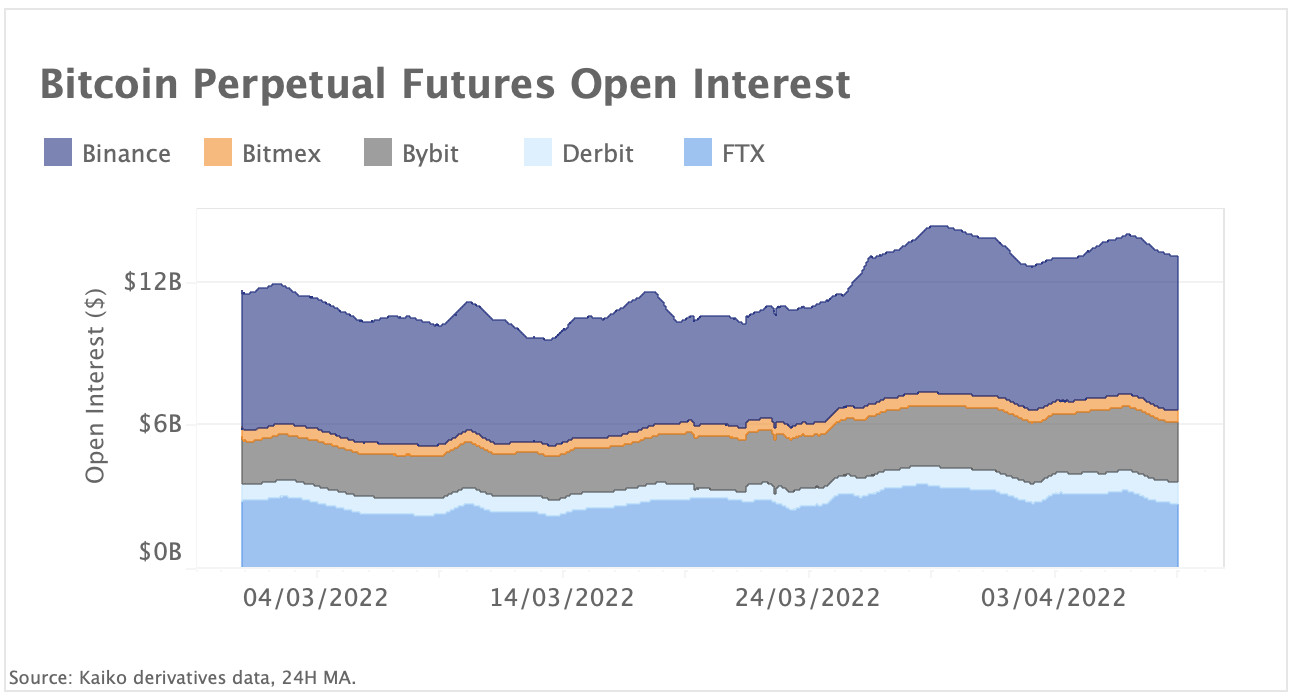
Despite remaining above March levels, Bitcoin perpetual futures open interest declined by 7% to around $13B last week. Spot prices tumbled by $3k between Aprill 5-7 following the release of hawkish Fed minutes, spurring over $140mn of long liquidations across markets. FTX and Bybit registered the bulk of the decline in open contracts. Bitcoin open interest has increased at the end of March alongside a spike in spot demand and improved risk sentiment. However, since then, the trend has been mostly uncertain. With funding rates at neutral levels on most exchanges, this suggests bullish demand remains weak.
Traditional safe havens register mixed performance
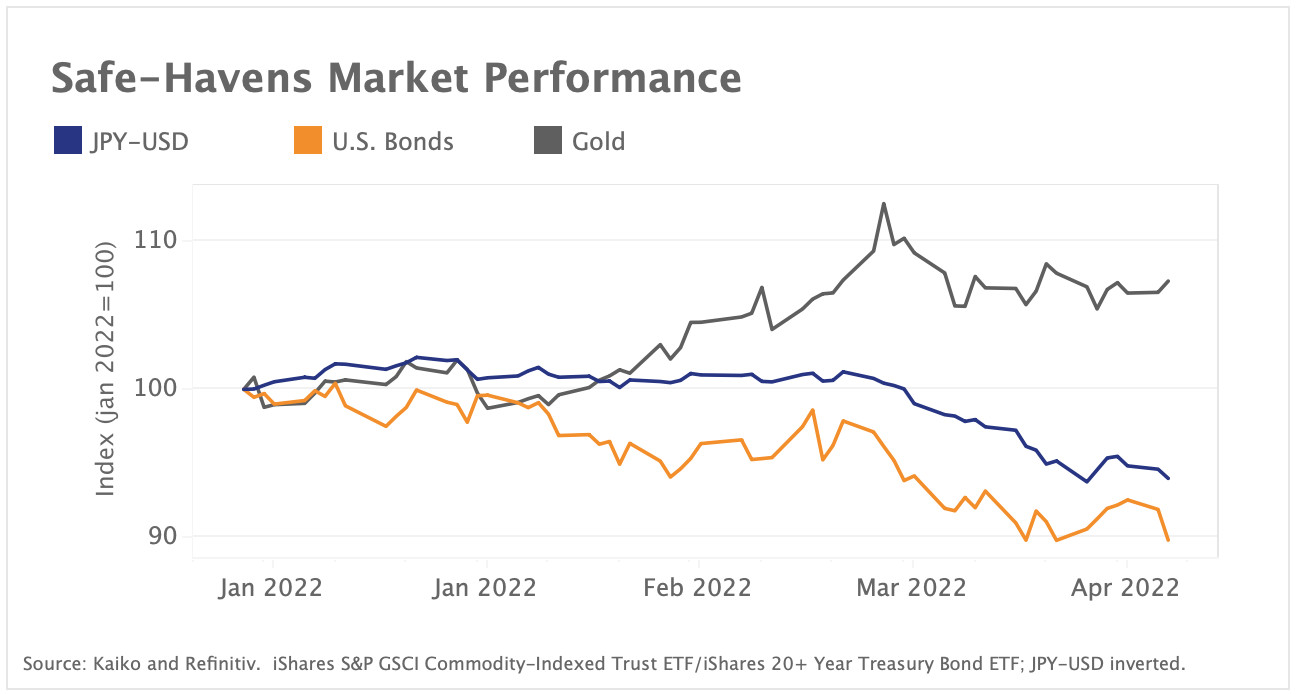
Safe haven assets registered mixed returns since the start of 2022 amid heightened geopolitical and macroeconomic uncertainty. Above we chart the market performance of U.S. bonds, gold, and the Japanese Yen (JPY) which occasionally or consistently behave as safe havens i.e. assets that maintain their value in volatile market environments. We observe that the war in Ukraine has boosted the appeal of gold which gained over 6% since the start of the year despite rising bond yields. By contrast, the Fed’s increasing hawkishness and surging energy costs weighed on the performance of U.S. bonds and the JPY, which failed to retain their value. Despite remaining well below its all-time high in November 2021, Bitcoin has outperformed other crypto assets and traditional equities showing resilience to geopolitical tensions.
Risk sentiment plummets on hawkish Fed minutes
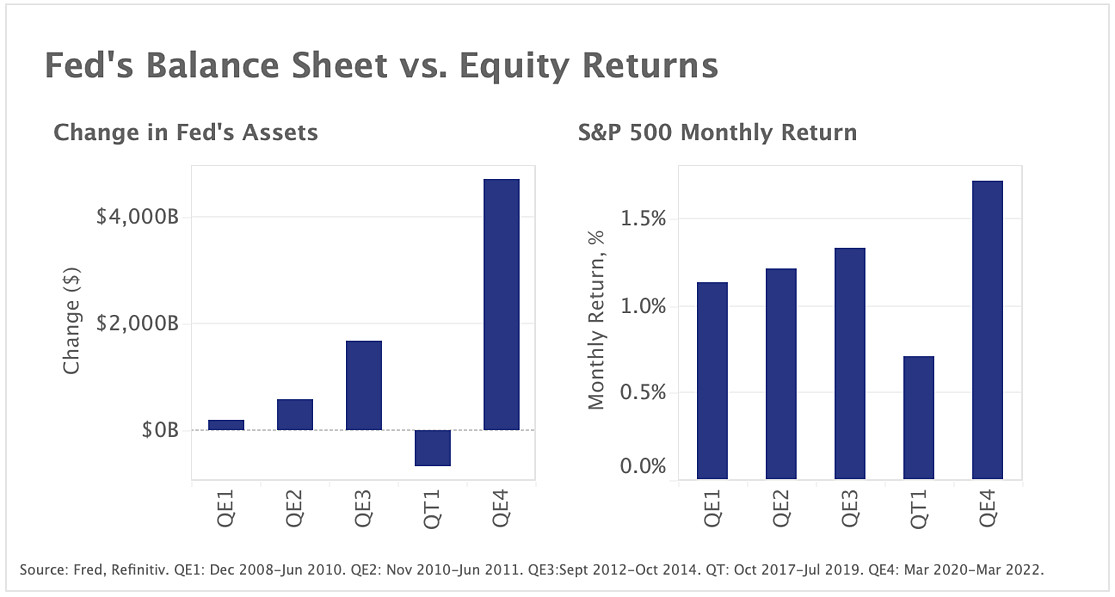
Risk assets tumbled last week following the release of hawkish Fed minutes, outlining an aggressive two-stage policy tightening. The U.S. central bank is considering raising rates by 50bps instead of the standard 25bps move and reducing its massive balance sheet (i.e. quantitative tightening or QT) at a much faster pace than during the previous round of QT. Above, we chart the change in the Fed’s balance sheet and the average monthly returns of the S&P 500 during periods of quantitative easing (QE) and tightening (QT). We observe that since the first quantitative easing program was implemented following the 2008 financial crisis, the amount of liquidity injected into the market with each round of stimulus has increased. The post-pandemic monetary stimulus is significantly larger than the combined asset purchases from 2008 to 2014.
Risk assets have heavily benefited from abundant central bank liquidity over the years and appear to lose some traction after the start of quantitative tightening. The average monthly returns of U.S. equities were around 50% lower during the previous period of QT relative to QE despite the process being widely telegraphed by the Fed and priced in by the market.