Bitcoin mining has been a topic of debate due to its energy consumption and carbon emissions. To better understand the realities of mining, its environmental impact and Bitcoin at large, it's essential to comprehend the process and how it uses energy.
In this article, we’ll cover the process of mining, why it consumes a considerable amount of energy, the impact of mining in terms of emissions and explore the advancements that have already started to make mining more sustainable. We will delve into the dynamics of mining efficiency, carbon intensity, the role of renewable energy, and the effects of policies on emissions - all for you to have precise facts and figures in mind about Bitcoin’s consumption.
What is Bitcoin mining and why does it consume energy?
Bitcoin mining is the process of adding transactions to the blockchain, which is a public ledger of all Bitcoin transactions. Miners use specialised hardware, such as Application-Specific Integrated Circuits (ASICs), to solve a mathematical cost function. By solving these problems, miners validate transactions and add new blocks to the blockchain. This process requires a substantial amount of energy because the protocol is designed such that the cost of obtaining mining rewards should always approach the value of the rewards.
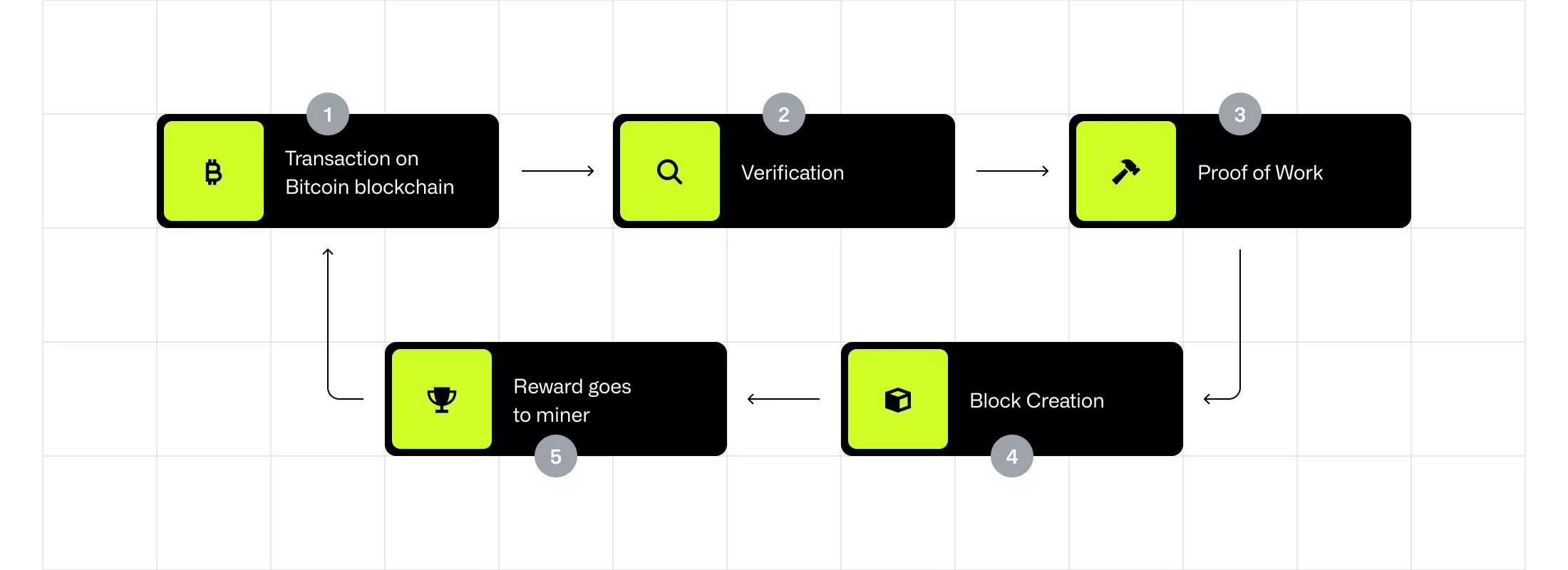
Miners compete with one another to find the solution to the cost function, and the first miner to do so is rewarded with newly minted bitcoins and transaction fees from the transactions they include in the block. If the value of the rewards go up, more miners will try to compete for the rewards. When more miners join the competition, the protocol automatically makes mining costlier so that the cost again approaches the value of the reward. If the value of the rewards go down, the opposite happens.
The dynamics of mining efficiency
Over time, the average network efficiency of Bitcoin mining has improved due to the continuous advancements in ASIC performance. This means that the amount of energy required to perform a hash (a unit of work in mining) has decreased. In simple terms, during our analysis period, the overall efficiency of the Bitcoin network has generally been improving, which is a positive trend. However, there have been some short periods where efficiency decreased. These decreases coincided with significant increases in the price of Bitcoin, which resulted in higher profitability for miners in the short term.

When Bitcoin prices rise rapidly, older and less efficient mining units that were previously unprofitable due to the increasing difficulty of mining may become profitable again. This leads to these less efficient units rejoining the network, which temporarily lowers the overall efficiency. This situation continues until either the price of Bitcoin decreases again or the mining difficulty catches up to the increased profitability.
This dynamic has implications for Bitcoin's energy consumption. When less efficient mining units are reintroduced to the network, it requires more energy to sustain the same level of mining output. Therefore, rapid price increases can contribute to a temporary increase in Bitcoin's energy consumption until the network adjusts back to a more efficient state.
Carbon intensity and the role of renewable energy
The carbon intensity of Bitcoin mining varies greatly between regions, primarily due to differences in energy sources. The majority of the mining network's carbon emissions have historically been generated in non-western countries, where electricity generation relies heavily on fossil fuels such as coal and oil, but this has changed in recent years. Current regions with high carbon intensity include Kazakhstan, Montana, Kentucky, and Alberta.
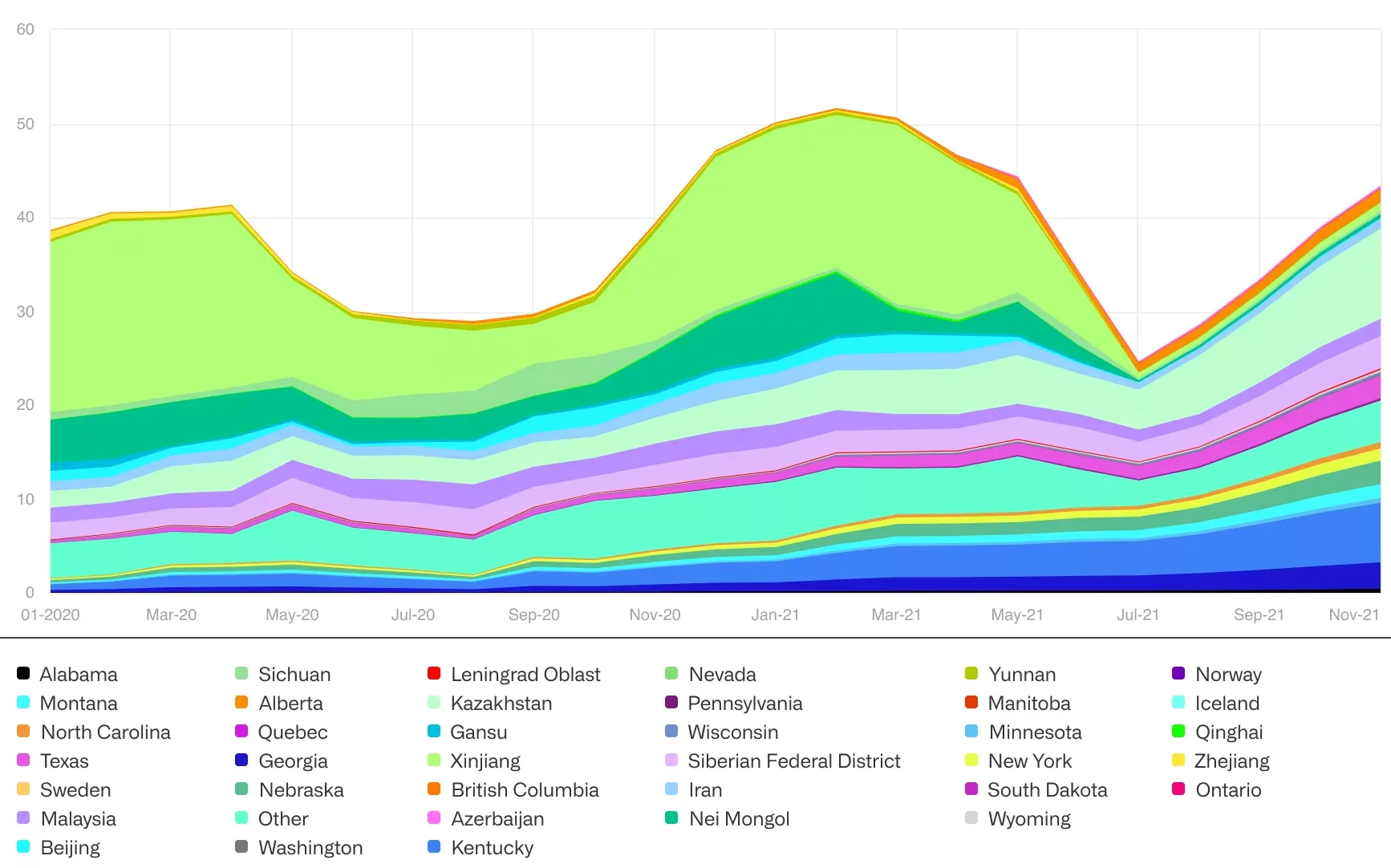
In contrast, regions such as Norway, Iceland, Sweden, Quebec, and Manitoba have low emissions due to their abundant hydropower resources. Hydropower is an attractive option for miners because the marginal carbon impact of each additional kWh of electricity produced from hydroelectric power generation is effectively zero. Moreover, hydropower facilities often operate at suboptimal levels due to seasonal fluctuations in water availability or long distances from major demand centers. Bitcoin mining can serve as an opportunity to increase the profitability of these facilities without generating emissions.
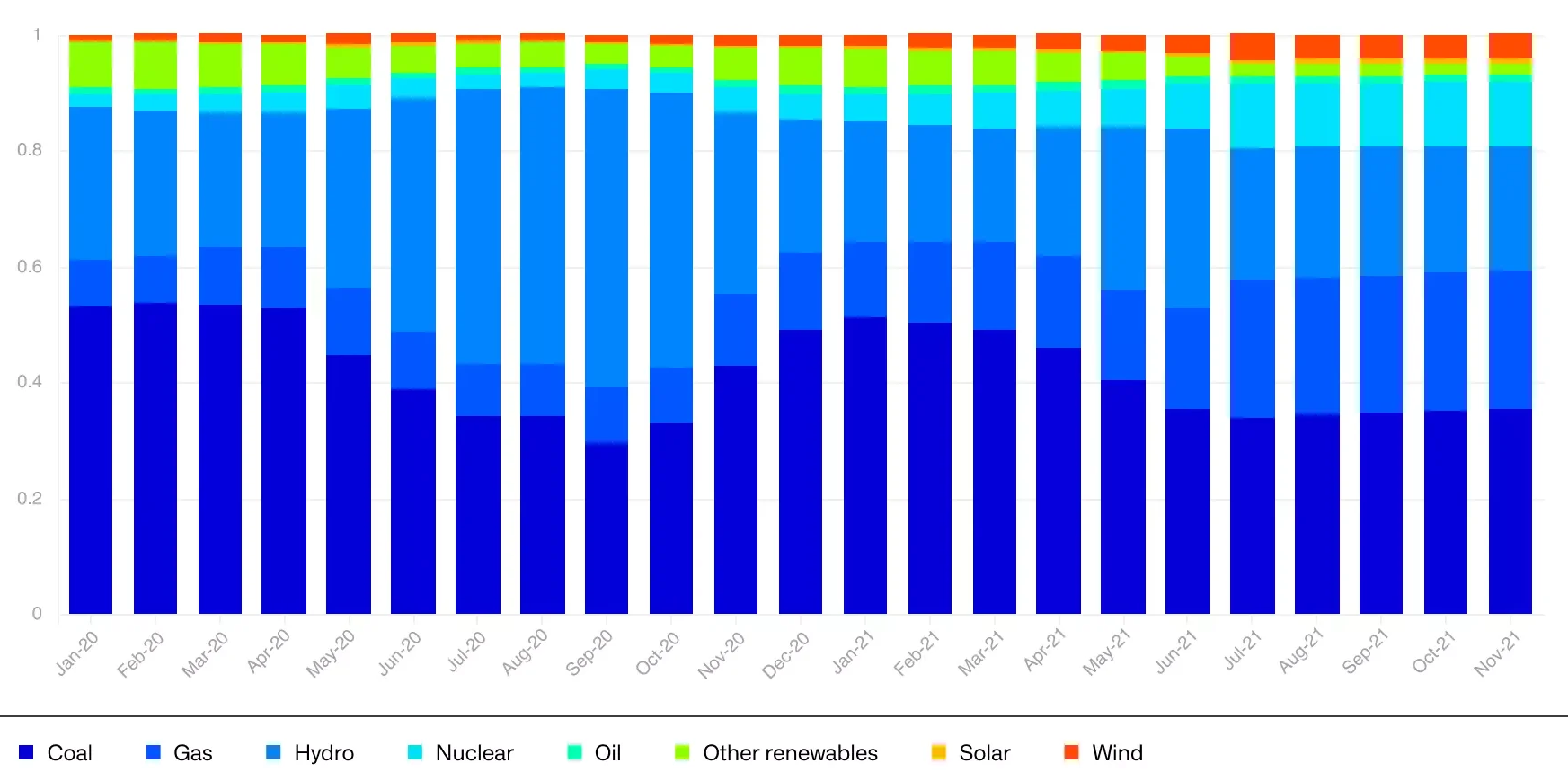
Lastly, Bitcoin mining has opened up the possibility for oil producers to convert their unused and environmentally damaging flared gas into a valuable source of energy, ultimately reducing harmful emissions and offering a more sustainable solution. Indeed, we estimate 802 TwH worth of power to be wasted each year in gas typically flared or vented directly into the atmosphere during the production of oil. By harnessing this gas for Bitcoin mining, oil producers can monetise what was previously an unwanted byproduct while reducing harmful emissions and minimising environmental impact.




Effects of policy on emissions
The regional differences in the carbon impact of mining are often a result of policy consequences in various jurisdictions. Mining has tended to flow to countries with heavy subsidies for fossil fuels, leading to higher emissions. For example, coal, oil, and gas are heavily subsidised in countries such as China, Kazakhstan, and Iran, which results in a higher carbon footprint for mining operations in these regions. However, recent dynamics have largely shifted Bitcoin mining to Western countries, with the United States being a notable destination.
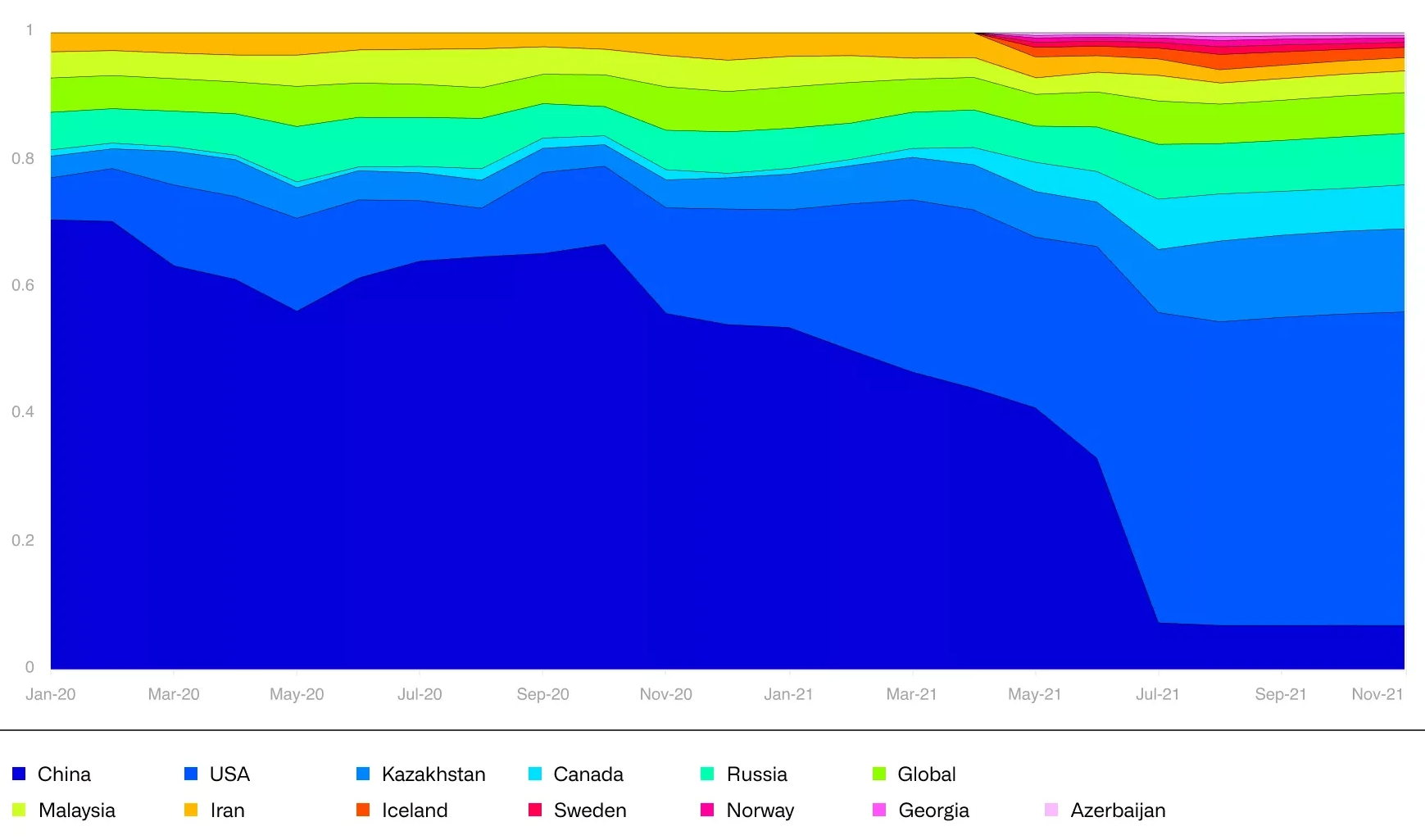
Western governments, where renewable energy penetration is generally higher, can reduce the carbon impact of Bitcoin mining by incentivizing miners to operate in their jurisdictions. They could achieve this through favourable policies, tax incentives, and supportive regulations. On the other hand, implementing outright bans, punitive taxation, or overly burdensome regulations would likely have the opposite effect, pushing miners towards jurisdictions with heavy fossil fuel subsidies and increasing overall emissions.
The costs and benefits of Bitcoin's carbon footprint
The carbon emissions associated with Bitcoin mining may seem concerning, but they represent a relatively small fraction of global CO2 emissions (0.08% at the end of 2021). We estimate that the Bitcoin mining network emitted 36 Mt of CO2 in 2020 and 41 Mt in 2021. In comparison, the gold industry is estimated to generate between 100 and 145 Mt of CO2 emissions annually. Galaxy Digital estimates that the global banking system uses 264 TWh (2019). At the average global carbon intensity, that would correspond to 130 Mt of CO2 emissions per year. As an additional comparison, using the same carbon intensity calculations, NYDIG estimates that air conditioners and electric fans, and tumble dryers, each emit 100 Mt and 53 Mt of CO2 annually, respectively.
Every use of electricity comes with a cost and a benefit. The Bitcoin network offers a global, freely available, censorship-resistant, debasement-protected, and human rights-preserving monetary network for the entire world. The benefits it provides, such as financial inclusion and freedom, easily justify the energy costs and emissions associated with its operation, especially since for billions of people, there is no alternative.
Additionally, it's important to recognize that as global electricity generation transitions towards renewables, the carbon emissions associated with Bitcoin mining will decrease. The focus among policymakers should be on promoting renewable energy generation rather than stifling the development of Bitcoin and other cryptocurrencies, to the detriment to users who primarily live outside developed markets.
Conclusion
In summary, Bitcoin mining is an energy-intensive process, but its impact on the environment is not nearly as dire as some suggest. The increasing use of renewable energy sources can help mitigate the carbon emissions associated with mining. Governments can play a crucial role in shaping the environmental impact of mining by implementing policies that incentivise the use of renewable energy and foster a more sustainable mining industry.
Ultimately, the potential benefits of Bitcoin and its transformative potential for the global financial system should be weighed against its environmental impact. By understanding the realities of mining and working towards a more sustainable future, we can strike a balance between the benefits of this groundbreaking technology and the need to protect our planet.