Close Menu
Crypto Valley Journal
    Facebook X (Twitter) Instagram
    Crypto Valley Journal
    • Hot Topics
      • News
      • Minds
    • Focus
      • Background
      • Blockchain
      • Legal & Compliance
      • Non-Fungible Token (NFTs)
    • Investing
      • Markets
      • Financial Products
      • Decentralized Finance (DeFi)
      • Exchange overview
    • Education
      • Basics
      • Glossary
      • Politicians on crypto
    • Statistics
      • Bitcoin-ETF-Flows
      • Ethereum-ETF-Flows
      • Crypto market data
      • On-chain data
    • Academy
      • Overview
      • Part 1: Blockchain
      • Part 2: Money
      • Part 3: Bitcoin
      • Part 4: Cryptocurrencies
      • Part 5: Decentralized Finance
      • Part 6: Investing
    • English
      • Deutsch
    Crypto Valley Journal
    You are at:Home » Glossary » XRP – Ripple
    XRP ETF outflows reach $4 million in one week - 21Shares leads the selling while whales simultaneously accumulate 140 million XRP.

    XRP – Ripple

    By Editorial Office CVJ.CH on 10. April 2020 Glossary

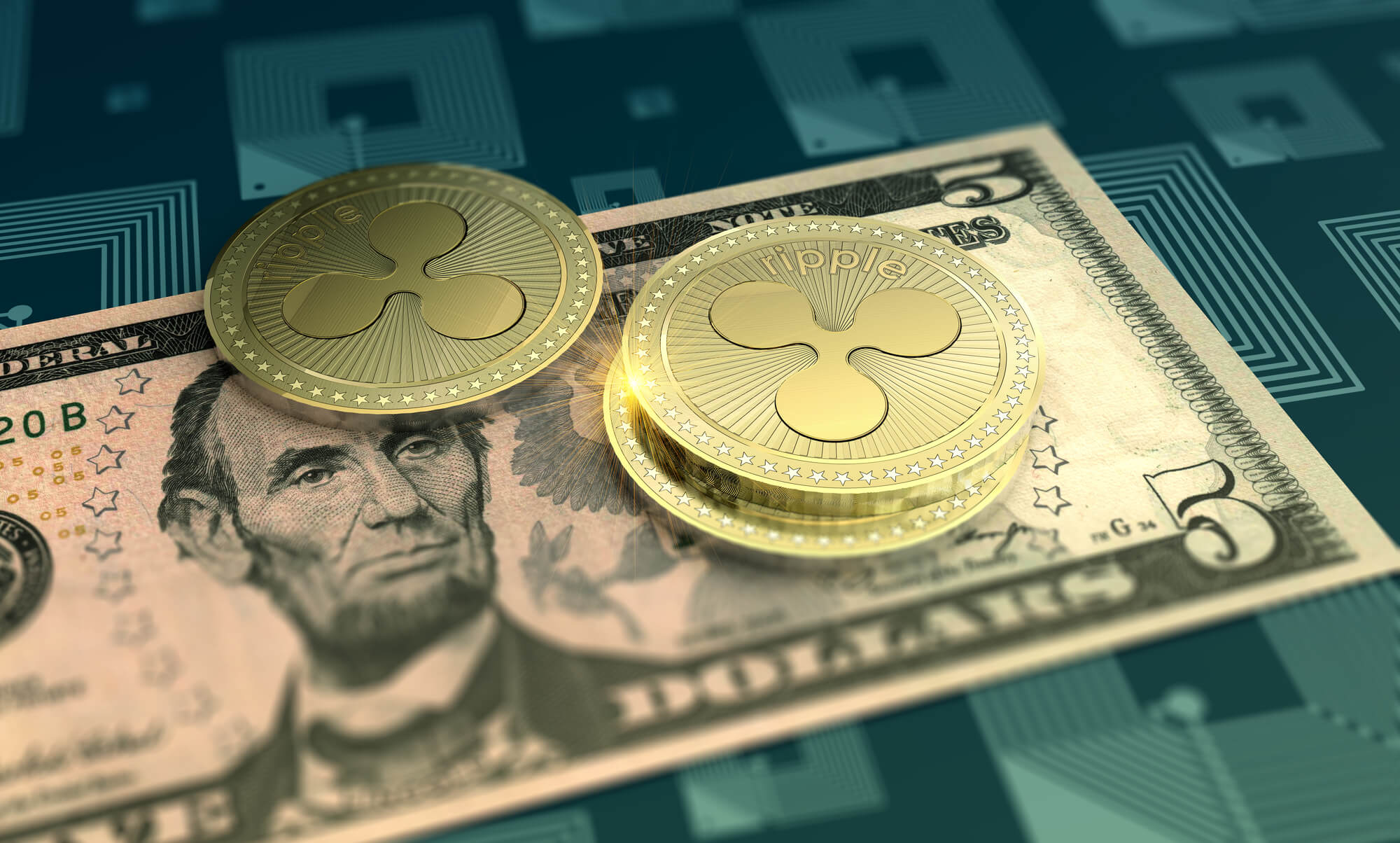
    Ripple is the company behind a blockchain-based digital payment protocol and the XRP cryptocurrency. Ripple's blockchain aims to revolutionize cross-border transactions, targeting financial institutions such as banks and payment providers that struggle with slow and expensive transfers.

    Ripple is not primarily intended to be a digital currency for everyday purchases, but rather to facilitate seamless and efficient cross-border money transfers, using XRP as a bridge currency. By enabling direct peer-to-peer (P2P) transactions, Ripple bypasses the intermediaries involved in cross-border transactions initiated by individuals or institutions.

    Ripple as a payment method

    Ripple was originally founded in 2004 as Ripplepay by developer Ryan Fugger. After the release of Bitcoin in 2009, Ripple adopted blockchain technology for transaction processing. Similar to Bitcoin, it aimed to provide a simpler, faster, and more secure way for global transactions, but with much faster transaction validation times. In 2011, McCaleb, David Schwartz, and Arthur Britto began developing the XRP Ledger in response to the limitations of Bitcoin.

    Ripple launched the XRP (also pronounced Ripple) cryptocurrency, which enables transactions within the Ripple network. Through strategic partnerships with financial institutions and payment service providers, Ripple has driven the integration of XRP into real-world use cases, expanding its reach and potential impact.

    XRPL - The Ripple blockchain

    Ripple's network is called XRP Ledger (XRPL) which runs with the Ripple Protocol Consensus Algorithm (RPCA). Ripple's consensus algorithm renders traditional mining or staking unnecessary while simultaneously improving transaction speed. This is different to Proof-of-Work (PoW), as used by Bitcoin, or Proof-of-Stake (PoS) implemented by the Ethereum blockchain. The RPCA consensus mechanism is not based on energy-intensive mining or validators, but on a network of trusted participants.

    The Ripple network enables rapid transaction confirmation, typically in seconds, and is capable of processing thousands of transactions per second. This scalability and speed make Ripple's XRP Ledger an attractive choice for financial institutions and payment service providers looking to streamline their cross-border payment processes.

    Ripple versus the SEC

    The SEC lawsuit against Ripple captured the attention of the cryptocurrency industry. Until then, blockchain projects in the United States had been operating with minimal regulatory guidelines. The Ripple case is the most prominent example of an initial coin offering (ICO) coming under scrutiny by authorities. It provides judicial insight into the application of the Howey test to digital assets, marking a pivotal moment for the industry.

    In December 2020, the SEC filed a lawsuit alleging that Ripple offered unregistered securities to U.S. customers through the sale of XRP tokens. Under the leadership of Gary Gensler, the SEC argued that many cryptocurrencies, including XRP, should be classified as securities under its jurisdiction. Three years later, in the summer of 2023, the Southern District Court of New York ruled that XRP tokens were not securities. This was a significant victory for the crypto industry, with implications for the regulation of digital assets in the U.S. and beyond.


    More than 50% of the bitcoin supply now sits at a loss. K33 sees parallels to earlier bear market lows that followed within weeks. Background
    11. June 2026

    Crypto winter: More than 50% of bitcoin supply at a loss

    More than 50% of the bitcoin supply now sits at a loss. K33 sees parallels to earlier bear market lows that followed within weeks.

    A Reuters analysis estimates the Trump family's crypto gains at $2.3 billion, while investors incurred book losses of the same amount. Background
    9. June 2026

    Trump family earns $2.3 billion from crypto projects

    A Reuters analysis estimates the Trump family’s crypto gains at $2.3 billion, while investors incurred book losses of the same amount.

    IC3 researchers refute three central promises of the AI and blockchain market narrative in a 155-page survey on crypto and AI.
    9. June 2026

    The synergy between AI and blockchain is overstated

    Strategy and BitMine are deep in the red: around USD 21 billion in unrealized losses. The Digital Asset Treasury (DAT) sector is wobbling.
    5. June 2026

    Strategy and BitMine underwater: USD 21 billion unrealized loss

    Crypto VC deals fell to around 50 in May 2026, a five-year low. Mega-rounds like Kalshi's Series F keep the dollar volume elevated.
    4. June 2026

    Crypto VC deals fall to five-year low in May 2026

    IBM is investing over USD 10 billion in quantum computing: What the roadmap to 2029 means for the Bitcoin risk.
    3. June 2026

    IBM’s quantum computing push shifts the timeline for Bitcoin risk

    Citi forecasts tokenized securities reaching 5.5 trillion USD by 2030, as DTCC, Nasdaq and ICE build out the underlying market infrastructure.
    1. June 2026

    Citi forecasts tokenized securities reaching 5.5 trillion USD by 2030

    Tokenization opens up new ways for companies to engage investors flexibly and structure financing efficiently.
    27. May 2026

    Tokenized equity shares: a tax-efficient alternative to traditional equity?

    Popular Posts
    About Crypto Valley Journal
    About Crypto Valley Journal

    On the pulse of the movement

    • Academy
    • Contact
    • Advertising
    • About us
    • Partner
    • Imprint
    • Privacy
    • Disclaimer
    Search

    Type above and press Enter to search. Press Esc to cancel.