
A summarizing review of what has been happening at the crypto markets of the past week. A look at trending sectors, liquidity, volatility, spreads and more. The weekly report in cooperation with market data provider Kaiko.
The last 7 days in cryptocurrency markets:
- Price Movements: USDT continues to trade at a discount to the U.S. Dollar. as outflows surge to $10bn.
- Order Book Liquidity: BTC and ETH market depth have diverged following a spike in ETH liquidity.
- Derivatives: BTC funding rates finally broke their neutral trend and dipped negative amid ongoing bearish sentiment.
- Macro Trends: Nasdaq's volatility is at its highest level since March 2020.
Markets stabilize following extreme volatility
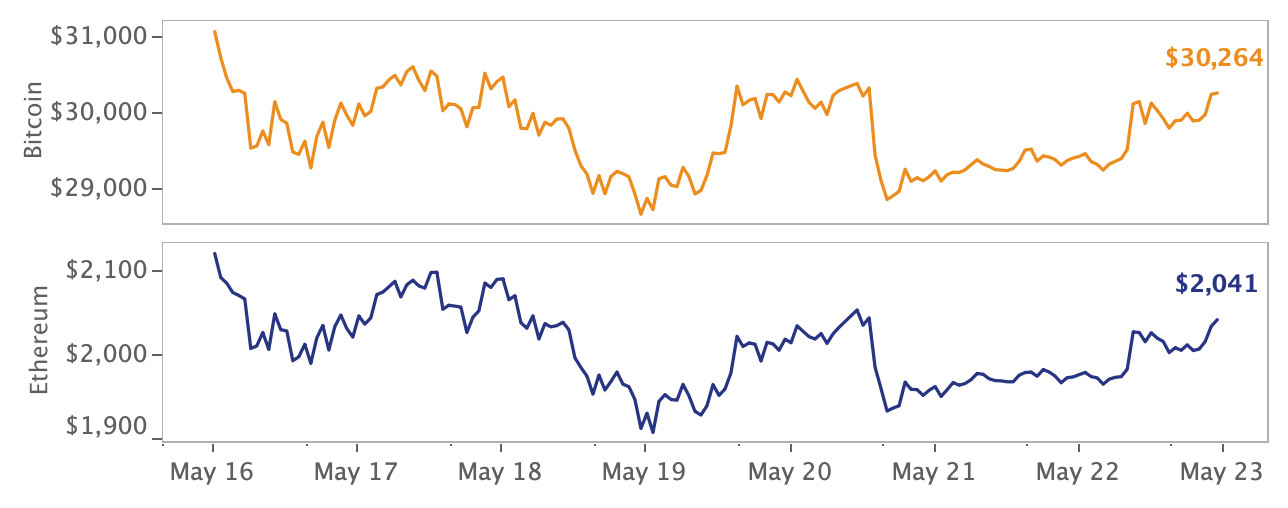
Market sentiment has stabilized considerably over the past week, with both Bitcoin (BTC) and Ethereum (ETH) trading above major levels of support as of Monday morning. Equity markets, on the other hand, have entered bear market territory, with the S&P 500 suffering its largest single day drop since the start of the pandemic. Despite an increasingly pessimistic global growth outlook, the crypto industry continues moving forward. Last week, FTX.US announced a new stock trading feature, Robinhood launched a DeFi wallet, and mining activity in China showed signs of resurgence despite a ban.
ETH to BTC ratio suggests falling risk appetite
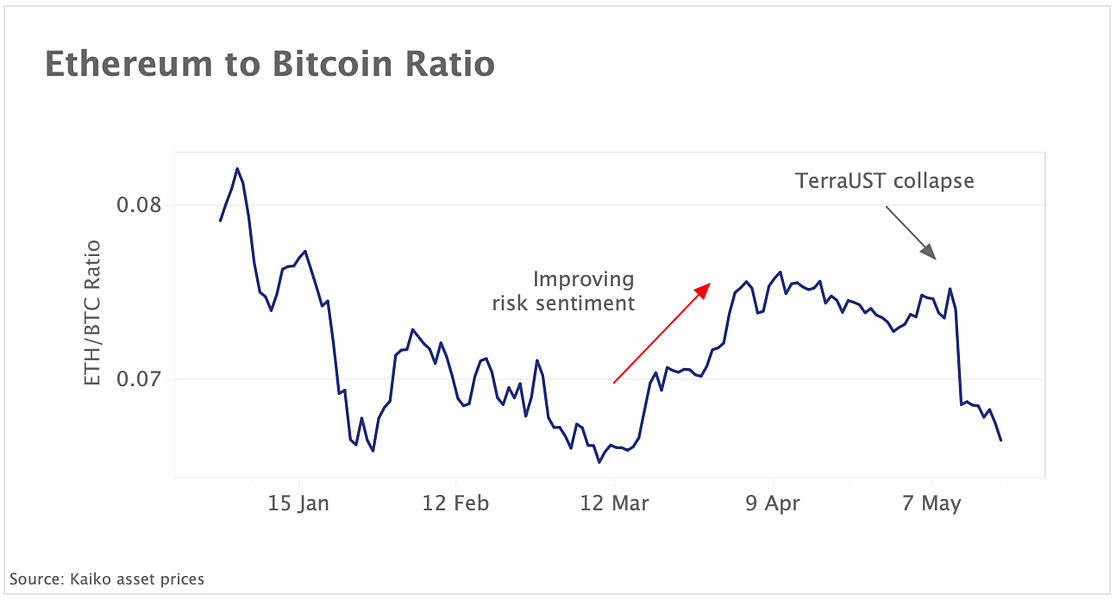
The Ethereum-to-Bitcoin price ratio has declined sharply in May, suggesting deteriorating risk appetite among crypto investors following Terra’s UST collapse. The ratio can be used as an indicator of Bitcoin’s dominance relative to altcoin markets and has historically served as a gauge for investor sentiment. When it increases, it suggests investors are rotating funds into Ethereum and altcoin markets, and vice versa. After rising in March on the back of a broad improvement in global risk sentiment, the ratio is currently nearing yearly lows.
Curve trading volume reaches all time highs
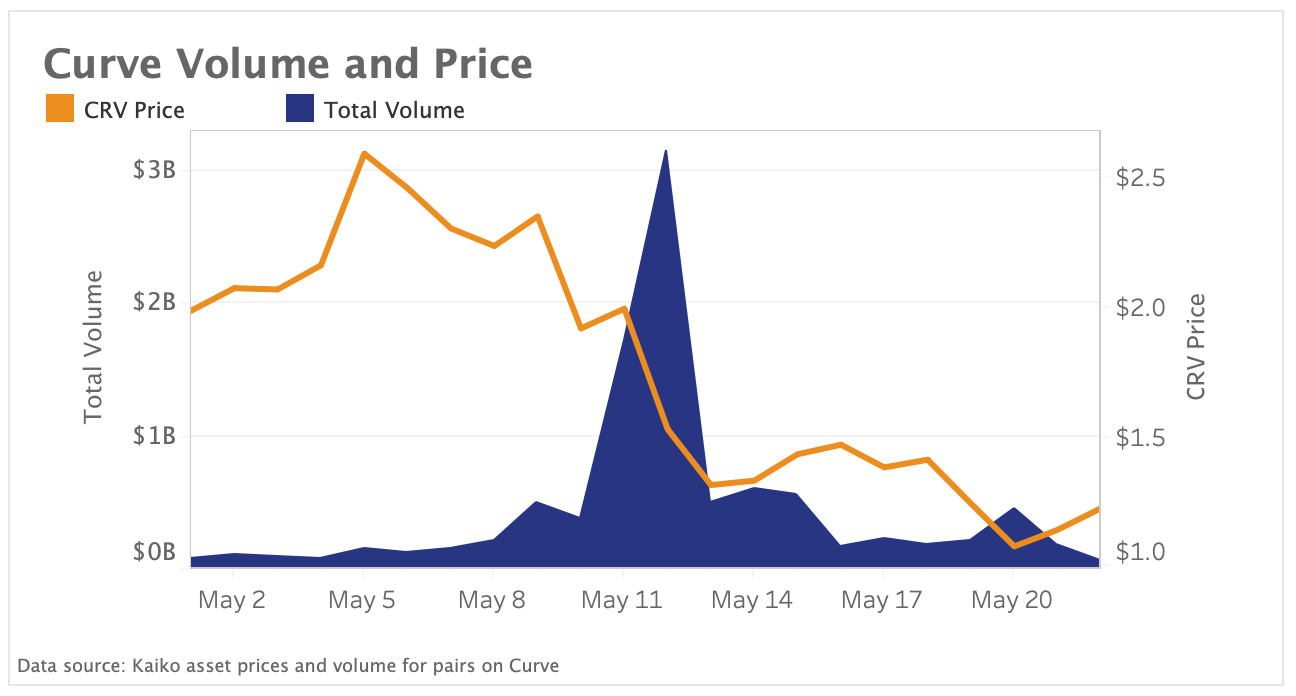
Curve is a decentralized exchange (DEX) platform offering liquidity pools designed for extremely efficient stablecoin trading. Last week we saw stablecoin trading volumes on Curve reach all time highs as UST collapsed and investors rotated funds into "safer" stablecoins. In the aftermath of UST's collapse, DAI trading volumes on Curve reached all time highs as it quickly regained its spot as the largest decentralized stablecoin, while USDC saw a similar increase in volumes. Despite the surge in activity, Curve's native $CRV token dipped to its lowest price levels since January 2021.



Spreads surge on Tether markets following Terra's collapse
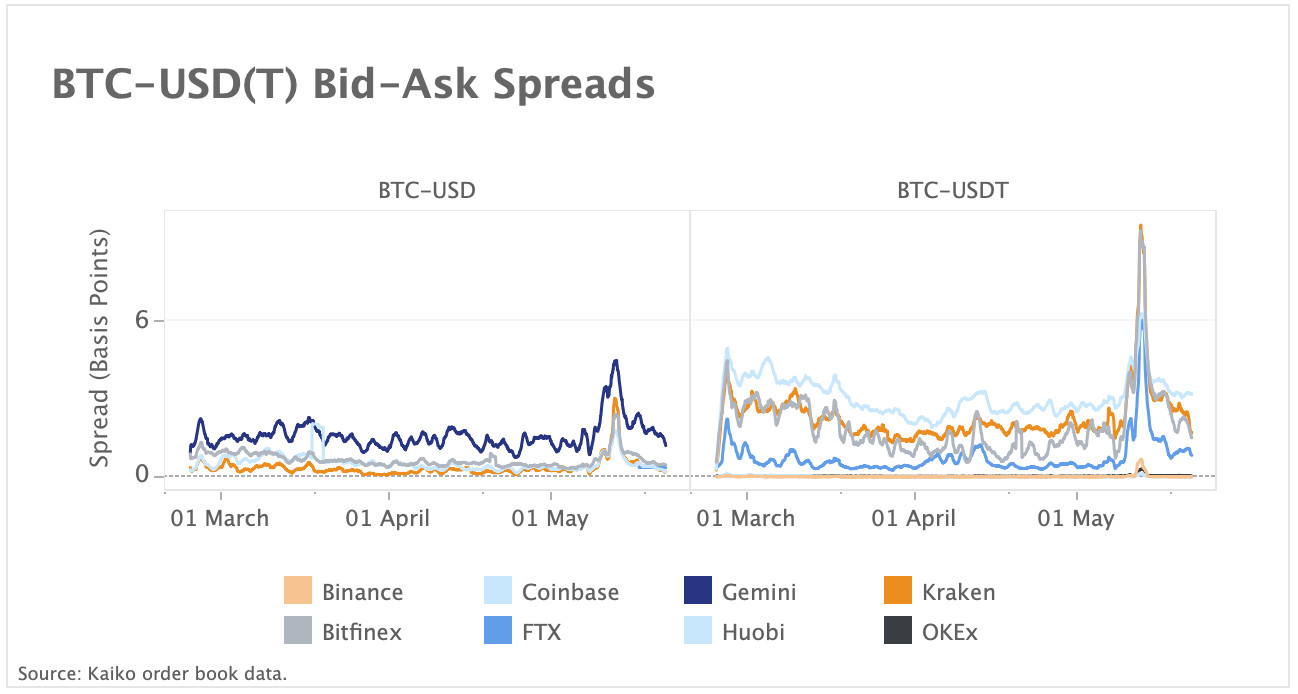
BTC-USDT markets saw a stronger increase in spreads than USD-denominated pairs following Terra’s UST collapse and USDT’s de-pegging on May 12. This is in line with on-chain findings which suggests that most of the Luna Foundation Guard’s (LFG) $3B worth of Bitcoin reserves - which were deployed in defense of Terra’s UST peg - were executed against USDT. The bid-ask spread is a measure of the cost to trade and is a proxy of overall market liquidity. Typically, higher spreads are associated with deteriorating liquidity and market stress.
The chart above shows BTC-USD and BTC-USDT bid-ask spreads on the major markets for both pairs. We observe that on Bitfinex, BTC-USD spreads rose from 0.3 bps to 2.3 bps between May 8-12. This is significantly less than the nearly nine-fold surge in BTC-USDT spreads over the same period. BTC-USDT spreads on FTX also rose six-fold exceeding 9bps on May 12. By contrast liquidity on the largest USDT market, Binance remained relatively resilient after the exchange saw its BTC-USDT market depth surge to an all-time high starting May 7.
Funding rates break neutral trend and dip negative
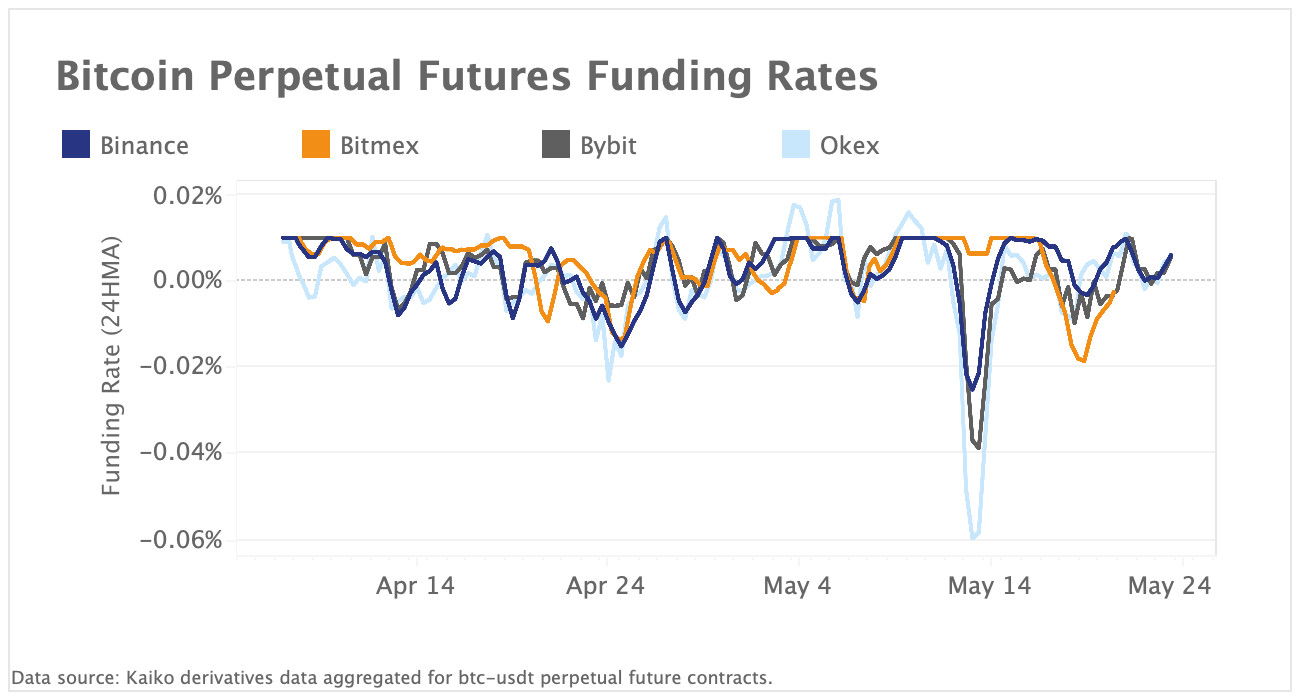
So far this year we have seen a regime of neutral or even slightly positive funding rates across exchanges as rates quite closely mirrored BTC price action. However, last week we finally observed a sharp move away from this trend as funding rates for BTC dipped sharply negative. Funding rates are a useful gauge of sentiment amongst institutions who make up the vast majority of investors in futures markets. That sentiment has been hard to determine so far this year due to the neutral rates, but last week was the first indication in the markets that institutions are becoming increasingly more bearish. However, that being said, as of this morning funding rates moved positive again and back towards the range we’ve been accustomed to this year, so perhaps the fear in futures markets was short lived.
Nasdaq volatility reaches highest level since March 2020
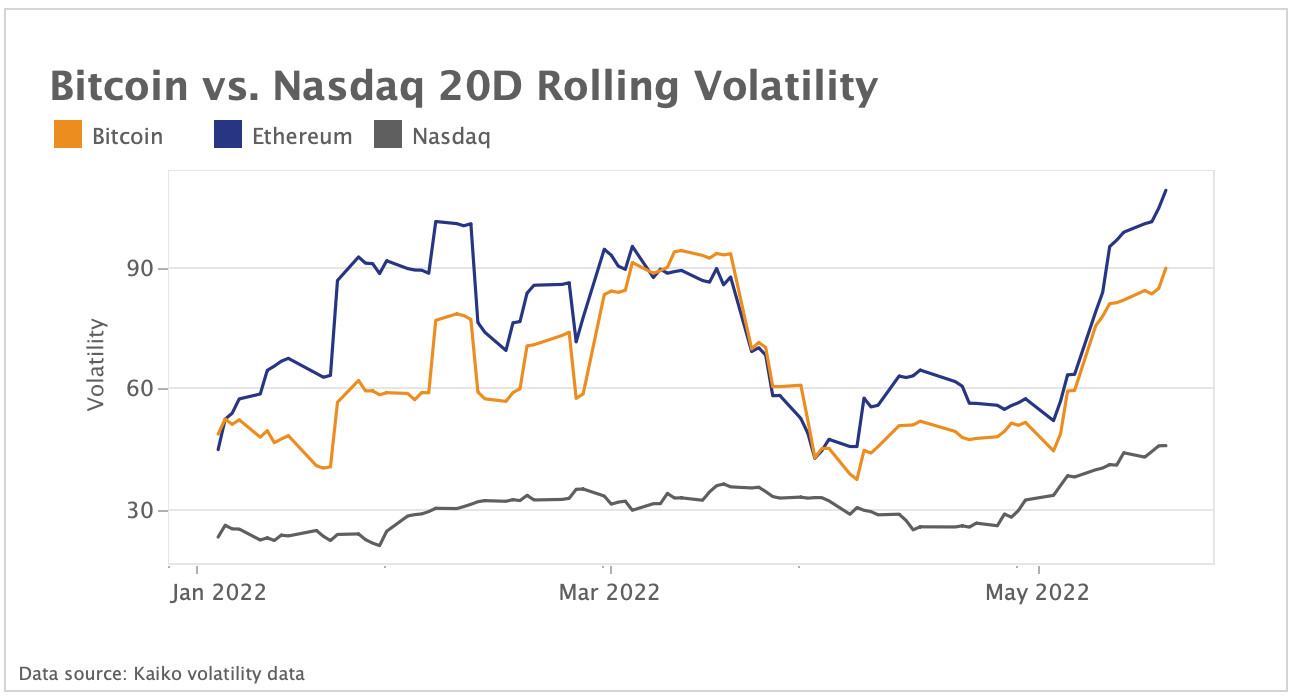
Worries about global growth have hit risk assets hard this year, and crypto has been no exception. However, investors that are wary of the volatile nature of crypto have likely been taken by surprise. Nasdaq's volatility this month, is at his highest level since March 2020. The Nasdaq and S&P 500 extended their losing streak to 7 consecutive weeks last week. Big U.S retailers such as Walmart and Target warned of companies scrambling to save their customer base in the face of rising prices. Bitcoin and Ethereum volatility also reached yearly highs as contagion fears hit the market after the Terra collapse.
Tether outflows on the rise
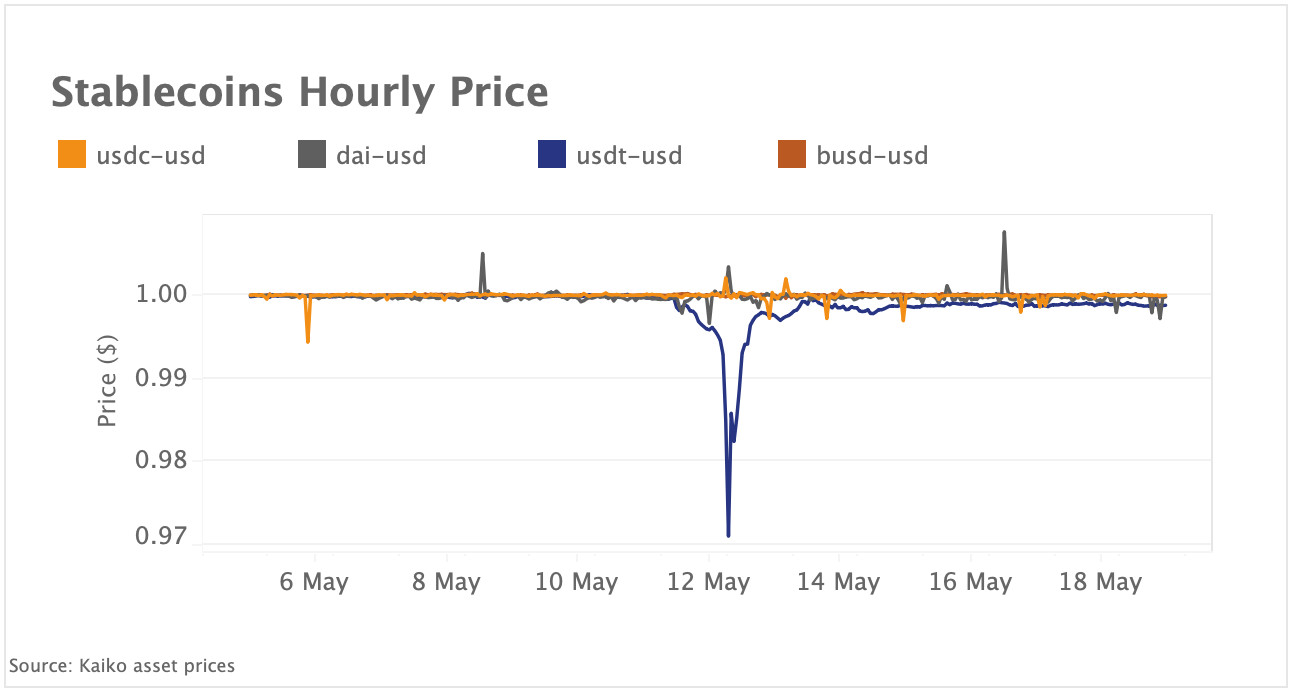
The loss of confidence following the collapse of the Terra ecosystem continued to spur volatility in the rest of the stablecoin market. Since the start of May, Tether's circulating supply has dropped by $10 billion as the stablecoin dropping to as low as $0.94 on May 12th. The redemption of Tether's mechanism is reserved for verified users and only executed above a $100k threshold. As a result this leaves market sell orders as the easiest route for smaller traders to cash out. By contrast the second and third largest stablecoins - Circle’s USDC and Binance USD - saw their market capitalisations increase by $4bn and $900mn respectively. All stablecoin prices (charted above) have remained more volatile than average since the start of May.
We can look at buy/sell ratios to understand how traders are reacting to uncertainty in stablecoin markets. On Bitfinex (the exchange that shares a parent company with Tether), the sell ratio for Tether has soared over the past two weeks. For USDC, sell volume surged in the immediate aftermath of UST's collapse. Over the past week however buys now far outweigh sells, reflecting current supply metrics. In an attempt to re-assure investors amid strong USDT outflows, Tether’s parent company published the stablecoin’s quarterly reserves, which shows a decline in the share of commercial paper it holds.
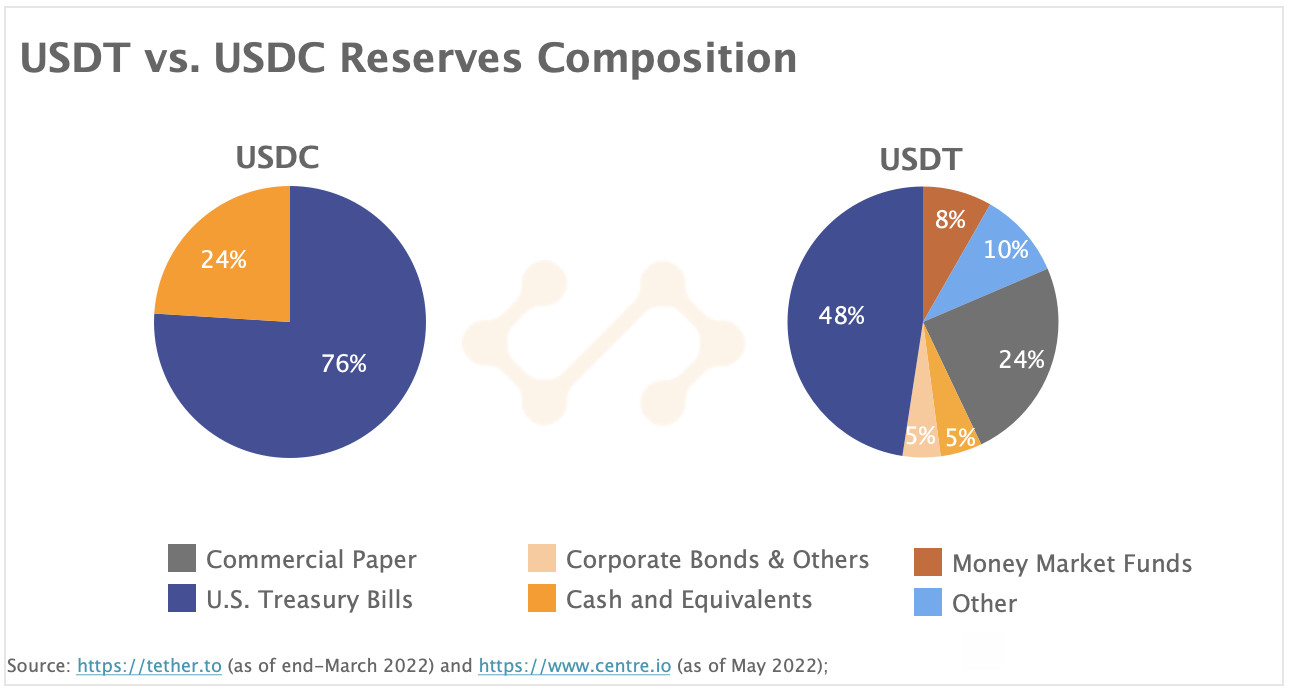
Typically, commercial papers, which are short-term unsecured debt issued by corporations, are seen as less liquid and riskier than cash. They now account for 24% of Tether’s reserves, down from over 30% at the end of 2021. However, the share of money market funds increased 8%. From a risk and liquidity standpoint, money market funds are very similar to commercial papers. Overall, USDC’s reserves are much more concentrated with 77% held in U.S. Treasury Bills and 22% in cash.